Cold does not create weaknesses; it reveals them. A battery that is marginal in October is the one that fails in January, and the tires that are soft all winter were soft in November. Four checks, done in an afternoon, prevent most of what a breakdown service is called for.
1. Test the battery, and the charging system with it
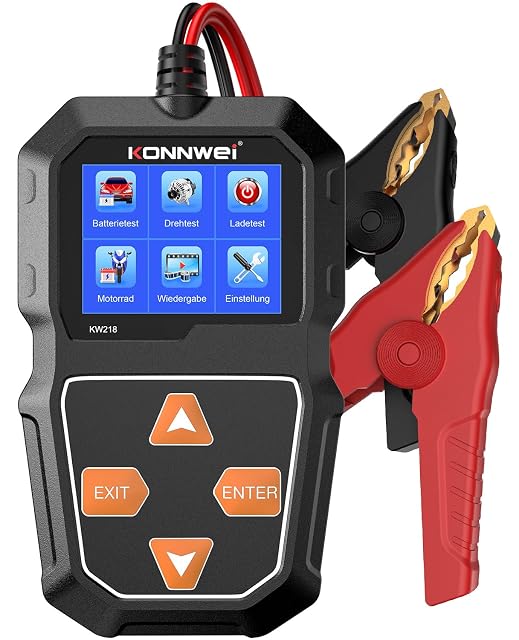
The KONNWEI KW218 names the chemistries it supports — including AGM flat plate — and reports internal resistance as well as voltage. Internal resistance rises as a battery ages, and its trend over two winters is the earliest warning you will get.
2. Charge it properly if it has been standing
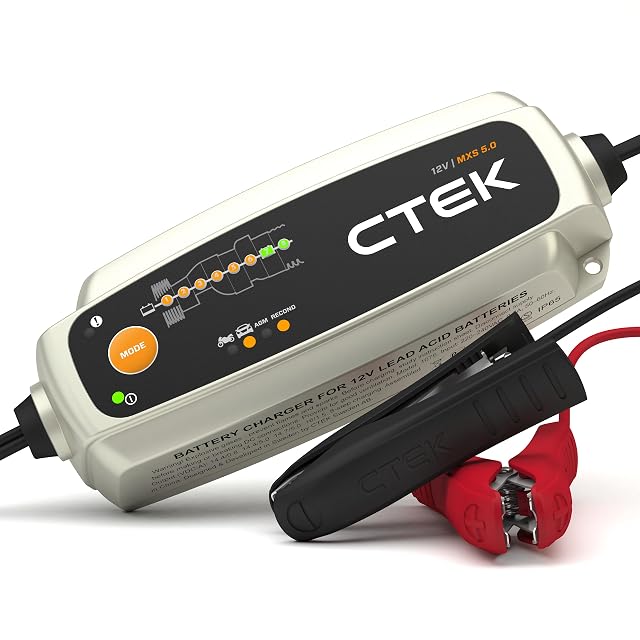
The CTEK MXS 5.0 has temperature compensation, which is exactly the feature that matters in a cold garage: correct charging voltage depends on temperature, and a charger that ignores it leaves a battery permanently short.
3. Set the pressures cold
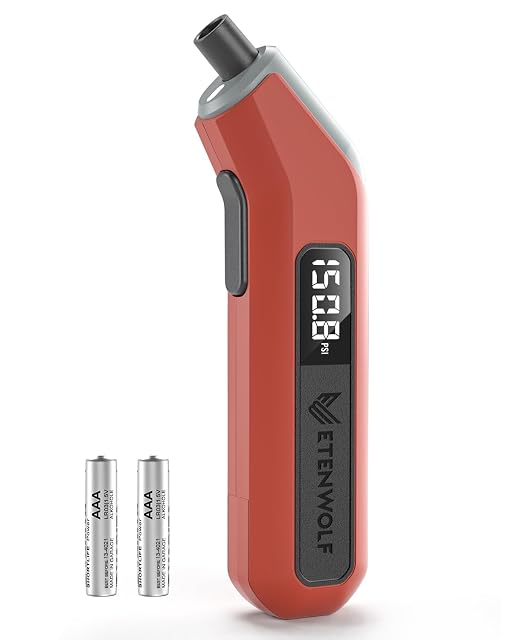
The ETENWOLF digital gauge reads in bar to a stated ±0.06 bar against a named standard. Set them against the door placard with the car cold — and check the spare, which nobody does.
4. Clean the terminals, with something to see by
The Osram LEDinspect POCKET200 is slim enough to fit between a wing and an engine, publishes three output levels and states 6500 K — daylight-neutral, which is what lets you tell a brown wire from a black one and green corrosion from shadow.
And keep leads in the car
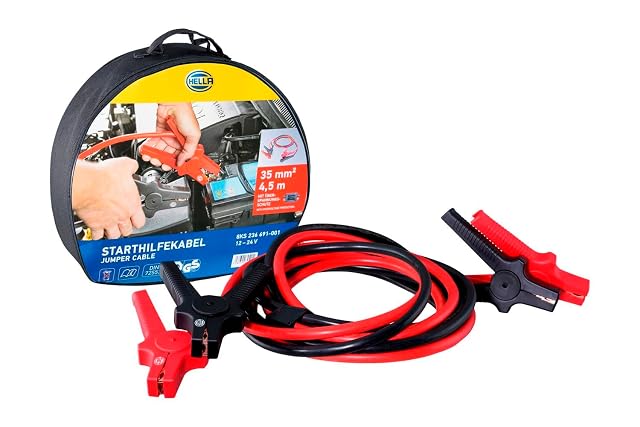
The HELLA 4.5 m (15 ft) pair is 35 mm (1.38 in)² and rated for diesels to 4000 cc. Leads never go flat, they work after five years in a boot, and 4.5 m (15 ft) reaches a car parked awkwardly.
The check that costs nothing at all
Squeeze each battery clamp by hand. If it moves, that is your fault found — and no purchase fixes what a wrench does.
Which tool does the job you have?
Your winters are cold but dry
Battery, coolant and wipers cover most of it, plus tires appropriate to the temperature.
Roads are salted where you live
Corrosion becomes the main enemy, and washing the underside matters more than any tool.
You park outside
Locks, seals and glass need attention that a garaged car never asks for.
You keep a second set of wheels
The swap and its storage are the whole job, plus a torque wrench and a retorque.
Picking by the job in hand
Battery check
Cold multiplies the demand on a battery and exposes one that was already weak. A test before winter is cheaper than a recovery in it.
Coolant concentration
A tester takes seconds and prevents the most expensive winter failure there is.
Wipers, washer fluid and glass
The cheapest items on the list and the ones that decide whether you can see. Summer washer fluid freezes.
Tires
Rubber compound behavior changes with temperature, which is why winter tires exist independently of snow. Pressures also drop as it gets colder.
What to look at first
A coolant tester you trust
A refractometer is more reliable than a float tester and is not expensive. This is the one measurement where being wrong is very costly.
A way to test the battery under load
Voltage alone tells you little. A load or conductance test is what identifies a battery that will fail on the first cold morning.
Washer fluid rated for your temperature
Concentrates are rated to a temperature. Diluting to summer strength and then meeting a cold snap cracks reservoirs and pumps.
Somewhere to store the off-season wheels
Cool, dry, out of sunlight and off the ground. It is not glamorous and it decides how the tires are in spring.
Underbody washing
Where roads are salted, rinsing the underside is the single most effective anti-corrosion measure available to an owner.
Which figure for which repair
The check
The tool
Why it matters
Coolant strength
Refractometer
A frozen engine is terminal
Battery condition
Load or conductance tester
Cold exposes a weak one
Washer fluid
The right concentrate
Summer fluid freezes
Tires
Pressure gauge
Pressure drops with temperature
What goes wrong most often
Testing the battery on voltage alone
A battery can show a healthy resting voltage and still fail under starting load. Voltage is the least informative test available.
Topping coolant with water
Every top-up with plain water dilutes the freeze protection. Over a few years that is enough to leave an engine unprotected.
Storing wheels badly
Tires stored in sunlight, on a damp floor or deflated come out of storage worse than they went in.
Forgetting to retorque after a wheel swap
Wheel bolts settle after the first few miles. The retorque is part of the job, not an extra precaution.
By how much you do yourself
The mild winter
Battery test, coolant check, wipers and washer fluid. That covers the realistic failures.
The salted roads
Add regular underbody rinsing and attention to seals and locks. Corrosion is the cost of winter here.
The two-set owner
A torque wrench, wheel storage, and the discipline to retorque. Simple and entirely repeatable.
Calibration, storage and working life
Winter preparation is mostly measurement, and the measuring tools need to be trusted. A tester left in a freezing garage all year is not necessarily reading correctly when you need it.
Rinse a refractometer with clean water after use and store it dry.
Keep washer concentrate sealed: it absorbs water and loses its rating.
Store wheels cool, dry, out of sunlight and off a damp floor.
Check that a battery tester’s clamps are clean, since corrosion falsifies the reading.
Safety
Winter jobs bring cold hands, hot coolant and slippery ground together.
Never open a cooling system while it is hot: it is pressurized and the release is violent.
Coolant is toxic and attractive to animals: clean spills immediately and store it sealed.
Lift only on level, solid ground; frozen or muddy ground is not a base for a jack.
Keep a light and a warm layer with any winter roadside kit: the cold is part of the hazard.
6/12 V · 100–2000 CCA · flooded, AGM flat plate and more · color LCD · alloy clamps
The tester that names the chemistries it supports and reports internal resistance alongside voltage — the two things that separate a diagnosis from a light.
Best for: Someone who wants the underlying numbers rather than a pass or fail.
12 V · temperature compensation · RECOND recovery mode · AGM program · from the maker of the first smart 12 V charger
The reference on this shelf: temperature compensation, a recovery mode for deeply discharged batteries, an AGM program, and a charging profile used by more than forty vehicle manufacturers according to the maker.
Best for: Anyone who intends to own one charger for a decade, and anyone with an AGM battery.
Cold, after the car has stood, rather than straight after a run. A surface charge flatters a tired battery, which is why one passes at the garage and fails on the first frost.
Does a maintainer help a daily driver?
If the journeys are short, yes. A battery that never reaches full sulphates slowly and loses capacity permanently, and a night on a maintainer each month prevents it.
Why check pressures before winter specifically?
Because pressure falls with temperature. A tire set correctly in September is measurably low in December, and it stays that way until someone checks.
How do I know my coolant is strong enough?
Test it with a refractometer, which reads the freeze point directly. Topping up with water over the years is what quietly weakens it.
Will my battery survive the winter?
Voltage will not tell you. A load or conductance test is what identifies a battery that is fine in autumn and fails on the first cold morning.
Do I need winter tires if it does not snow?
Their advantage comes from the compound’s behavior at low temperatures, not only from snow. Below a certain temperature the difference is real on dry roads too.
Why do my tires look flat in winter?
Pressure drops as temperature falls. Checking and adjusting cold, in winter conditions, is part of the seasonal routine.
Does washing the underside really help?
Where roads are salted, it is the most effective corrosion measure an owner has. Salt left in seams is what does the damage.
What should I do about frozen locks and seals?
Treat seals with a suitable rubber conditioner before winter and keep a lock de-icer somewhere other than inside the car.
Use it for: Anyone who intends to own one charger for a decade, and anyone with an AGM battery.
Where it excels: Temperature compensation, which almost nothing else at this price has — charging voltage is temperature-dependent chemistry, not a refinement
Where it falls short: Three times the price of a functional 10 A charger
Adapters, leads and spares from the same aisle, at the price we read. Confirm they suit the tool you choose before ordering: it turns on the connector and the part number, which the product page gives.
AEG 97204 · Jump leads — 2 × 3.5 m (7 × 11 ft) · section equivalent to 25 mm (0.98 in)² copper stated · 12 V and 24 V · petrol 5500 cc / diesel 3000 cc stated · storage bag · $105
CARTMAN CM-BC0612-22 · Jump leads — 6 AWG ≈ 13.3 mm (0.52 in)² · 12 ft (3.7 m) · high-density CCA · patented dual-grip rubber clamps · flexible to −25 °C (-13 °F) · carry bag
Ansbell CNBJ · 12 V circuit testers — 6–36 V DC · backlit LCD, ±0.2 V stated · 14.7 ft lead · overload buzzer · built-in LED light · continuity and polarity
BGS 723 · 12 V circuit testers — 3–48 V · diode test lamp with LED indication · piercing function for insulated cables · $33
Where the information here comes from
The tools above are taken from the catalog of this site. Specifications come from the manufacturer and the Amazon product page; prices are what Keepa reported on the date shown, and both move. The order uses declared specifications, the weight of stated strengths against stated limits, and price. No tool here has been used by us on a real job, and nothing here claims it has.
Last checked on
Prices quoted in these summaries are dated readings. The live price is shown next to each product.