Most roadside problems are one of three things: a flat battery, a soft or punctured tire, or something you cannot see. Five items cover all three, and two of the five should live in the house rather than the boot — a lithium pack stored flat through a winter is the one that disappoints.
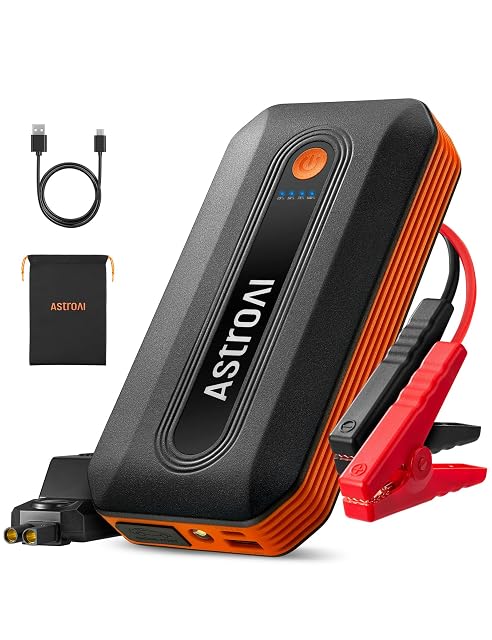
The AstroAI B8 is stated at 329 g (11.6 oz) and publishes an operating range of −20 to 50 °C (-4 to 122 °F). Charge it twice a year and keep it indoors: a pack that lives in a cold boot is flat on the morning it is needed.
2. A small inflator
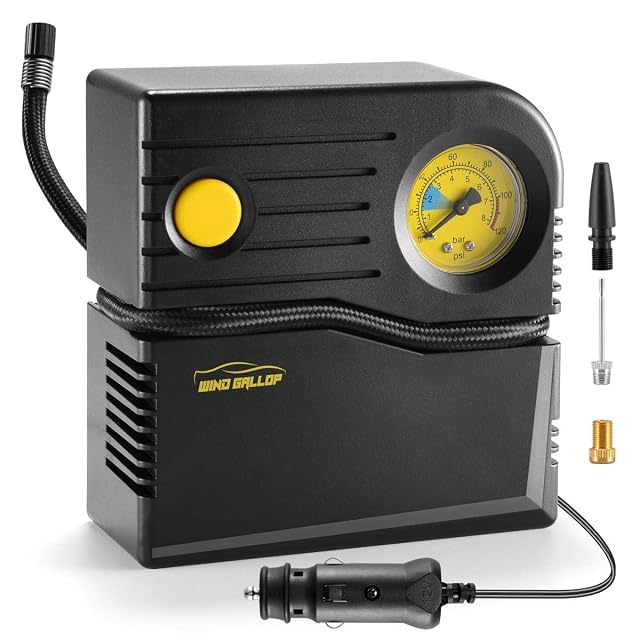
The WindGallop 12 V unit plugs into the accessory socket and carries three valve adapters. It is a top-up tool rather than a fast filler, and topping up is what tires actually need.
3. A plug kit with a valve core tool
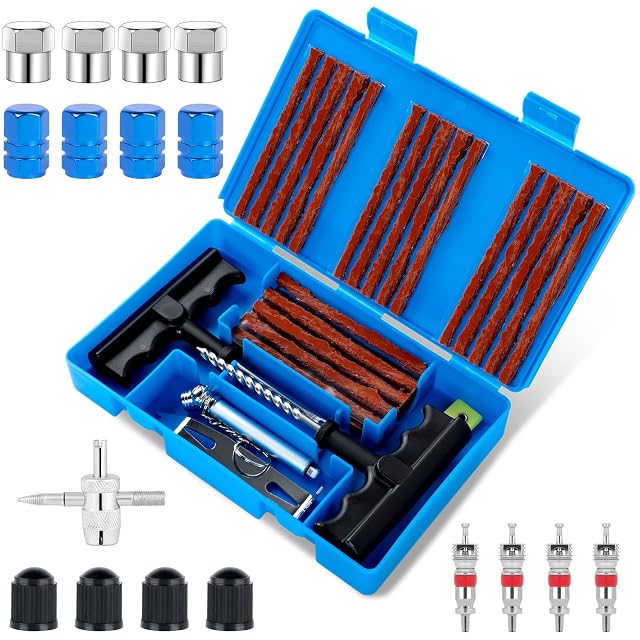
The Romon 48-piece kit includes a four-in-one valve core tool, which gets used more often than the plugs — a slow puncture is frequently a leaking valve core rather than a hole.
4. Jump leads, because they never go flat
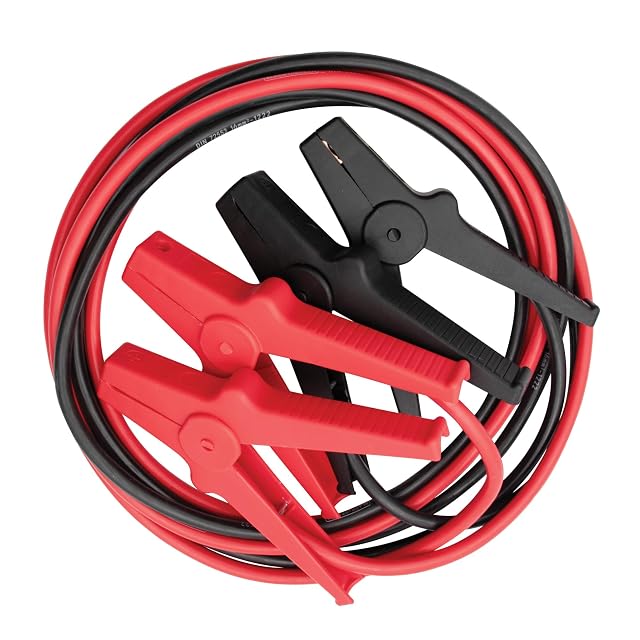
The Schumacher 3 m (10 ft) pair is 16 mm (0.63 in)² copper-coated aluminum, rated for 6, 12 and 24 V, and small enough to actually stay in the car. Three meters means the cars have to be nose to nose.
5. A code reader
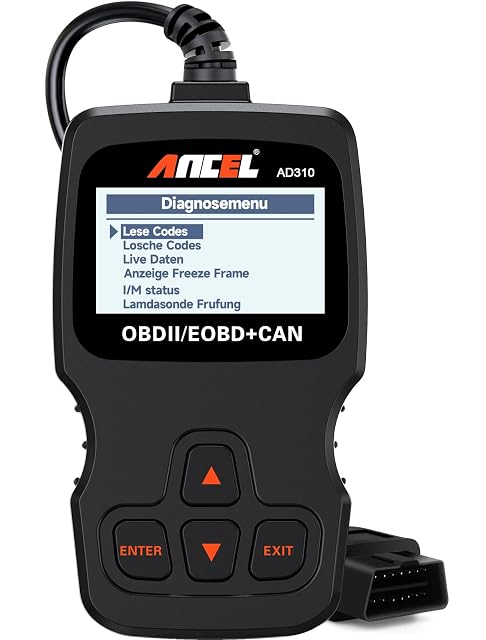
The ANCEL AD310 draws power from the socket, needs no battery and no app, and states its own limits. On a journey, a code is the difference between deciding and guessing.
What not to carry
A torque wrench in a hot boot, and anything with a click mechanism left wound up. Both belong in the garage.
Which tool does the job you have?
You drive short distances in a town
The legal requirements plus a light and a phone lead. Anything else is rarely used.
You drive long distances or rurally
Add a way to inflate a tire and a means of starting the car, because help is further away.
You carry children or passengers regularly
Warmth and water matter more than tools: a wait at the roadside is the real event.
You have no spare wheel
Check what your car actually carries: many now have only a sealant kit, and it has limits.
Picking by the job in hand
Legal obligations
These vary by country and by the countries you drive through. It is worth checking rather than assuming, especially before traveling abroad.
A puncture
The commonest roadside event by far. What you carry decides whether it is an hour or a recovery.
A flat battery
The second commonest. A compact jump starter removes the dependence on a passing stranger.
Waiting safely
High-visibility clothing, a warning triangle and a light. Being seen is the actual safety measure.
What to look at first
What the law requires where you drive
Requirements differ between countries and change. Carrying the wrong kit abroad can mean a fine, and it is easily checked in advance.
Whether the car has a spare at all
Many modern cars carry a sealant kit instead. That kit cannot repair a sidewall, and knowing that beforehand changes what else you carry.
The tools to use what you carry
A spare wheel is useless without the jack, the brace and, on many cars, the locking wheel bolt key.
Things that survive a boot
A boot goes from freezing to very hot. Batteries, sealant and adhesives all age faster there, so they need checking.
Weight and space
Everything carried is carried permanently. A kit that is too large gets removed the first time the boot is needed.
Which figure for which repair
The situation
What helps
What is often missing
Puncture
Spare or kit, plus tools
The locking bolt key
Flat battery
Compact jump starter
A charged one
Broken down at night
Hi-vis, triangle, light
A working torch
Long wait
Water and a warm layer
Anything at all
What goes wrong most often
Carrying a spare with no locking wheel bolt key
The key lives in the glovebox, the boot or nowhere at all. Without it the spare cannot be fitted, and this is discovered at the worst moment.
Never checking the spare’s pressure
A spare loses pressure over years of sitting. A flat spare is a very common and entirely avoidable discovery.
Assuming the sealant kit covers everything
Sealant handles a small tread puncture. It does nothing for a sidewall cut or a destroyed tire, and it has an expiry date.
Leaving a jump starter uncharged
Its internal battery self-discharges. A jump starter that has sat in a boot for two years is usually flat when it is finally needed.
By how much you do yourself
The town driver
Legal items, a torch, a phone lead and a hi-vis. Short journeys and help nearby.
The long-distance driver
Add a compressor, a repair kit, a jump starter, water and a warm layer.
The family car
The comfort items matter as much as the tools, because the wait is the part that is actually experienced.
Calibration, storage and working life
A car kit is only useful if it still works, and a boot is a hostile environment for anything with a battery or a chemical in it. Reviewing it twice a year is the whole maintenance.
Check the spare’s pressure and the kit’s expiry dates twice a year.
Recharge a jump starter on the maker’s interval, not when you need it.
Replace torch batteries or use a rechargeable light and keep it charged.
Check that the jack, brace and locking bolt key are all actually present.
Safety
The greatest roadside danger is other traffic, and the equipment that addresses it is the cheapest in the car.
Put on the high-visibility garment before leaving the car, not after.
Place the warning triangle at the distance the law where you are specifies.
Move occupants behind a barrier where one exists, not into the car on a hard shoulder.
Do not attempt a wheel change on the traffic side of a fast road: call for recovery.
329 g (11.6 oz) stated · −20 °C (-4 °F) to 50 °C (122 °F) stated · 10 built-in protections · QC 3.0 USB output
The pocket one: 329 grams, ten stated protections and a working range from −20 to 50 °C (-4 to 122 °F) — bought for the winter morning rather than for a headline current figure.
Best for: A small petrol car, and anyone who would rather carry the pack than store it.
Engine system only · 2.5 ft thick cable · no batteries needed · maker states ABS and airbag are NOT supported
The reader that has been on this shelf for a decade, and the one whose listing is most explicit about what it cannot do: the maker states in the first line that ABS, airbag and SRS codes are not supported.
Best for: The glovebox tool for an older car, where reliability matters more than features.
A pack needs no second car; leads need no charging. Leads work after five years in a boot and a pack does not, which is why many people carry both and keep the pack indoors.
Is a compressor worth the space?
Yes, and mostly for pressure top-ups rather than emergencies. Tires lose pressure over weeks, and a small 12 V unit turns that into a minute per wheel.
Why a code reader in the car?
Because a warning light on a journey is a decision: continue, or stop. A reader turns that into a code you can look up rather than a guess.
What am I legally required to carry?
It depends on the country, and on every country you drive through. Check before traveling abroad, because requirements differ and are enforced.
Is a sealant kit as good as a spare?
No. It handles a small tread puncture and does nothing for a sidewall cut. It also has an expiry date that most owners never check.
Should I carry a jump starter?
It removes the dependence on a passing stranger, which is its real value. It only works if it has been recharged periodically.
How often should I check the spare?
Twice a year is reasonable. Spares lose pressure slowly and a flat one is discovered at exactly the wrong moment.
Where should I keep the locking wheel bolt key?
Somewhere you will find it in the dark, with the jack and brace rather than loose in a glovebox. Its absence stops the job entirely.
Is it safe to change a wheel on a motorway?
Generally not, on the traffic side. Getting everyone behind a barrier and calling for recovery is the correct response.
Adapters, leads and spares from the same aisle, at the price we read. Confirm they suit the tool you choose before ordering: it turns on the connector and the part number, which the product page gives.
AEG 97204 · Jump leads — 2 × 3.5 m (7 × 11 ft) · section equivalent to 25 mm (0.98 in)² copper stated · 12 V and 24 V · petrol 5500 cc / diesel 3000 cc stated · storage bag · $105
CARTMAN CM-BC0612-22 · Jump leads — 6 AWG ≈ 13.3 mm (0.52 in)² · 12 ft (3.7 m) · high-density CCA · patented dual-grip rubber clamps · flexible to −25 °C (-13 °F) · carry bag
Ansbell CNBJ · 12 V circuit testers — 6–36 V DC · backlit LCD, ±0.2 V stated · 14.7 ft lead · overload buzzer · built-in LED light · continuity and polarity
BGS 723 · 12 V circuit testers — 3–48 V · diode test lamp with LED indication · piercing function for insulated cables · $33
Allstar Performance ALL44047 · Tire pressure gauges — 0–30 PSI · 4 in glow face · 14 in hose, 360° swivel chuck · release valve · no accuracy stated
AstroAI T3 · Tire pressure gauges — ANSI B40.1 · ±2 PSI from 80–120, ±3 below 80 · dual-head chuck · 1/4 in quick-connect · −10 to 50 °C (14 to 122 °F)
The tools above are taken from the catalog of this site. Specifications come from the manufacturer and the Amazon product page; prices are what Keepa reported on the date shown, and both move. The order uses declared specifications, the weight of stated strengths against stated limits, and price. No tool here has been used by us on a real job, and nothing here claims it has.
Last checked on
Prices quoted in these summaries are dated readings. The live price is shown next to each product.