Skip to content

The best ball joint separators for 2026

There are two families here and they do the same job differently. A fork separator is driven in with a hammer: fast, cheap, and it tears the rubber boot, which is fine when the joint is being replaced and expensive when it is not. A press or scissor separator pushes the taper out under screw pressure and leaves the boot intact, which is the whole argument for owning one. The specification to check is the jaw opening and reach against the joint you actually have — separators are sized, and the one in the combination kit is rarely the size on your car. We compare design, jaw opening and clamping range, adapters, material and stated use. Only two of these listings give a jaw figure at all, and none gives a rated capacity.

The models we recommend

  1. CCLIFE 2-piece separator set

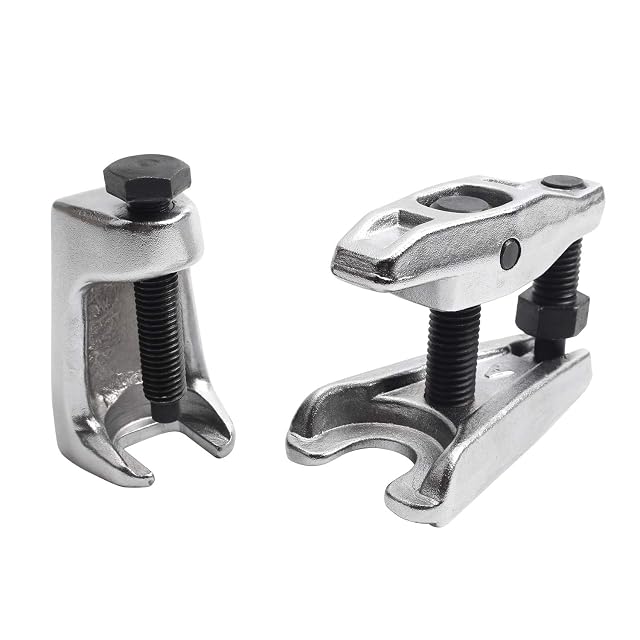
    18 mm (0.71 in) and 20 mm (0.79 in) separators · protective adapter for aluminum parts · forged Cr-V, oil-hardened stated

    Two press-type separators in 18 and 20 mm (0.79 in), with a protective adapter for aluminum components — the detail that separates a tool from a hammer.

    Best for: A single suspension job on a car whose joints are 18 or 20 mm (0.79 in).
    7.2/10

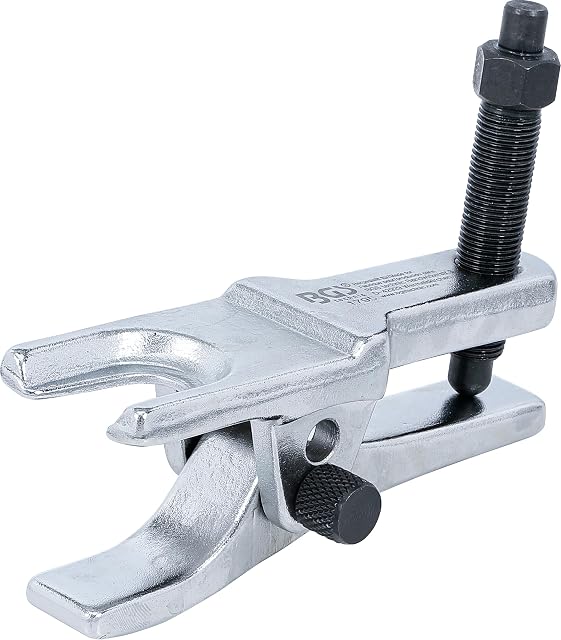
  2. BGS 1795 separator, 20–22 mm (0.79 to 0.87 in)

    20–22 mm (0.79 to 0.87 in) jaw opening · clamping range lockable at 30 and 55 mm (2.17 in) · forged · 1210 g (42.7 oz) stated

    A single forged separator with its jaw opening, clamping positions and weight all published — the sort of specification a trade catalog provides and a marketplace listing does not.

    Best for: A known job on a known car, where the size has already been measured.

    7.8/10

    ≈ $85

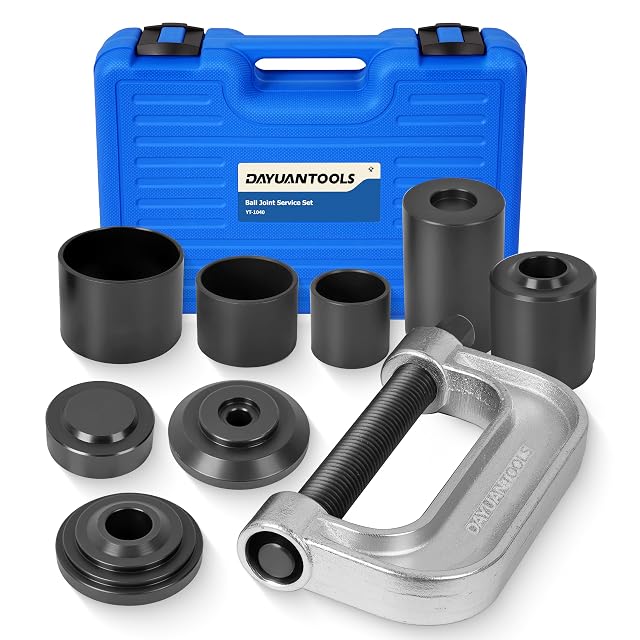
  3. DAYUAN 10-piece 4-in-1 C-frame press

    10 pieces · C-frame press · installation and removal adapters · stated for 1/2 and 3/4 ton 4WD with Dana 44 front axle

    A C-frame press rather than a separator: it removes and refits ball joints in the arm, which is a different job from splitting a taper.

    Best for: Replacing pressed-in ball joints rather than separating them.

    7.8/10

    ≈ $39

  4. HASKYY 3-piece separator set

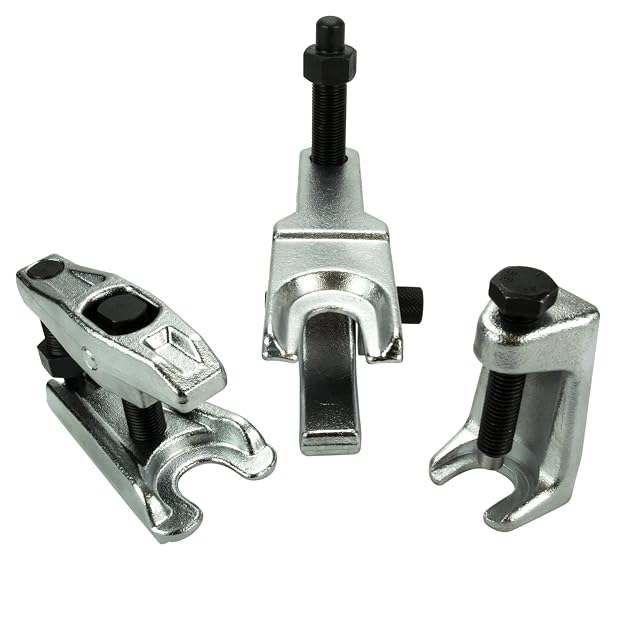
    3 separators · jaws 22–18, 19.5 and 19 mm (0.75 in) · clamping to 25/55 mm and 20–50 mm (0.79 to 1.97 in) · M16 × 1.5 and M12 × 1.75 threads stated

    Three separators with every dimension published — jaw opening, clamping range, drive size and thread pitch for each of the three.

    Best for: Someone working on several cars who wants coverage and published dimensions.

    7.8/10

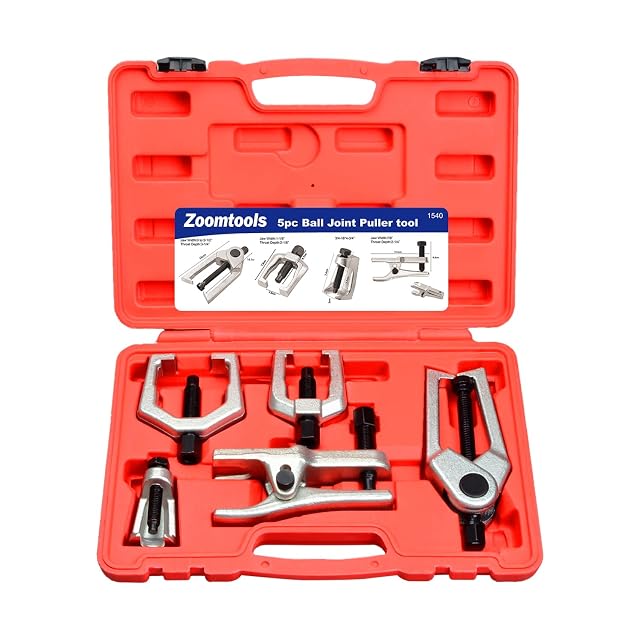
  5. Zoomtools PT1540M 5-piece front end kit

    5 adjustable tools · ball joint splitter, track rod separator and more · hardened alloy stated · carry case

    A five-piece front-end service kit rather than a single separator: five adjustable tools in a case, aimed at doing a whole suspension corner.

    Best for: A complete front-end job where you would rather have five tools than measure first.

    8.4/10

Need by need, within ball joint separators

Covering several configurations

A complete set covers the various sizes of ball joints and track rod ends. A single puller only suits one geometry.

CCLIFE 8061

Opening wide enough for the joint

A twenty-millimeter separator will not go over a van's ball joint. The stated opening range is compared with the part, not with the vehicle's class.

Zoomtools PT1540M

Taking the load without bending

A fork in soft steel twists before the joint lets go, and the tool goes in the bin. The stated steel grade, hardened or not, decides the number of jobs it survives.

HASKYY CKAW-14 + CSKA-14 + CUKA-14

Who each family suits, across ball joint separators

Ball joints and track rod ends
That is the whole purpose here: separating a tight taper without destroying the part or the boot.
Part to be kept
A screw-type puller separates without hammering, which preserves a part you intend to refit. That is its advantage over the brutal method.
Part to be replaced
When the part is going in the bin, a fork puller is quicker and destroys the boot. It is a deliberate choice.

What you gain and what you give up, on ball joint separators

Screw puller against fork
The screw separates gradually and preserves the part; the fork is quick, takes little room and destroys the boot. What happens to the part decides.
Force against ejection
A taper under tension releases violently. The part has to stay restrained, otherwise it flies off with force.
Jaw opening against access
A large jaw covers more sizes and will not fit into confined spaces. Several sizes are worth more than one large one.

Frequent questions on ball joint separators

Should the nut be removed completely?

No: leaving it at the end of the thread restrains the part when the taper releases violently. It is the central precaution of the operation.

Screw or fork?

The screw preserves the part and the boot; the fork is quicker and destroys the boot. What happens to the part decides.

The taper will not release, what do I do?

Put the puller under tension, then strike a sharp blow on the hub carrier beside the taper. The shock often frees what force alone does not.

Can I strike the ball joint directly?

That destroys the thread and the part. Striking beside the taper, on the solid section, is the correct technique.

Do I need penetrating fluid?

Applied in advance and left to work, it genuinely helps. On a taper the effect stays modest: it is an interference fit.

Should the nuts be replaced?

Many ball joint nuts are self-locking and single-use. Reusing them is a saving made in the wrong place on a steering component.

Is a check needed afterwards?

Any work on the steering or suspension calls for a wheel alignment check. It is a consequence, not an option.

Does a fork separator damage the boot?

Yes, nearly always: it tears the rubber as it goes in. Keep it for parts you are replacing, and use a screw-type puller when the joint has to be reused.

What stays with you, on ball joint separators

Leave the nut at the end of the thread: the taper releases violently and the part has to be restrained. Strike beside the taper and never on the ball joint, replace self-locking nuts — and any work on the steering makes an alignment check compulsory.

Summed up: ball joint separators

    Ball joint separators, side by side

    There is no table here, and the reason is in the listings. The figure published most often across these 5 products is set, given by 3 of them — short of the four in five a column needs to compare rather than to display gaps. Each product page says what its own maker published.

    Our guides on ball joint separators

    Sources, and the way we rank

    Specifications: manufacturer sheets for garage tools and the matching Amazon product pages. Prices and availability: Keepa.

    Most recent revision in this category: September 4, 2026.

    The method applied to ball joint separators