Skip to content

The best dual action polishers for 2026

A dual action machine spins and oscillates at once, which spreads heat and makes burning through paint difficult — the reason it, rather than a rotary, is the tool to learn on. The number that changes how it works is the orbit throw: around 8 mm (0.31 in) is precise and slow to correct, 15 mm (0.59 in) covers panels quickly, 21 mm (0.83 in) is for large flat surfaces. Forced rotation machines keep turning under pressure where a free-spinning DA stalls, which matters on curves. Then come backing plate size, stated power, and a speed range wide enough to finish as well as cut. We compare throw, drive type, plate size, stated power and speed range.

The models we recommend

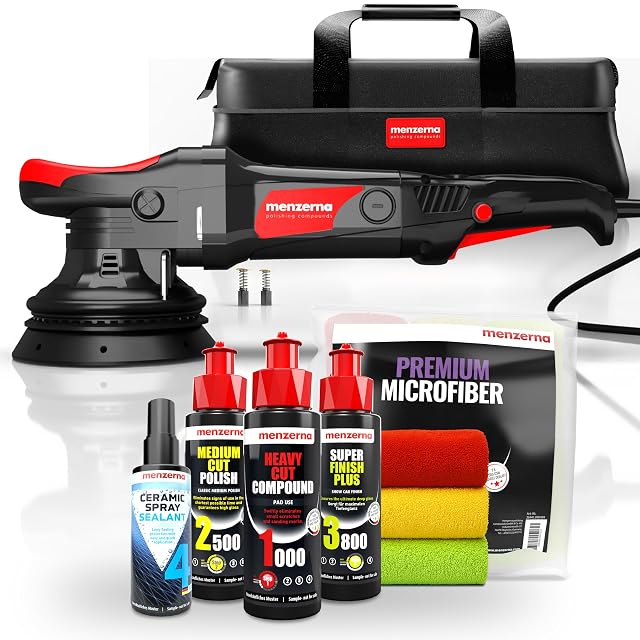
  1. menzerna MZ-XR with polish set

    720 W · 15 mm (0.59 in) throw · 6 speeds · 125 mm (4.92 in) plate · 2.8 kg (6.2 lb) · 8 m (26 ft) cable · 3 × 100 ml polishes included

    A corded 15 mm (0.59 in) dual action machine sold with three graded polishes — cut, medium and finish — from a maker whose compounds are the reference.

    Best for: A first machine polish, where having the right compounds matters as much as the machine.
    7.2/10

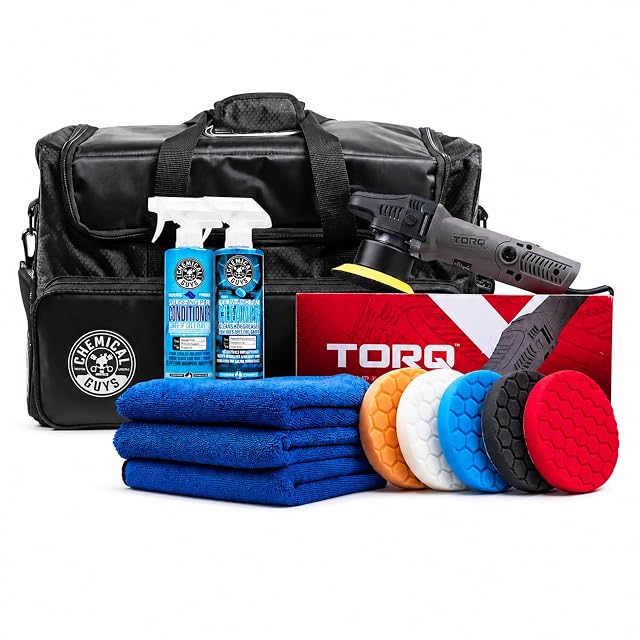
  2. Chemical Guys TORQX kit, 14 pieces

    14-piece kit · TORQX random orbital · cutting, polishing and finishing pads · towels · Arsenal Range bag · no machine specification published

    A 14-piece kit with graded pads and a bag, and not one of the five figures this shelf compares.

    Best for: A first kit bought on a brand, where everything arrives in one bag

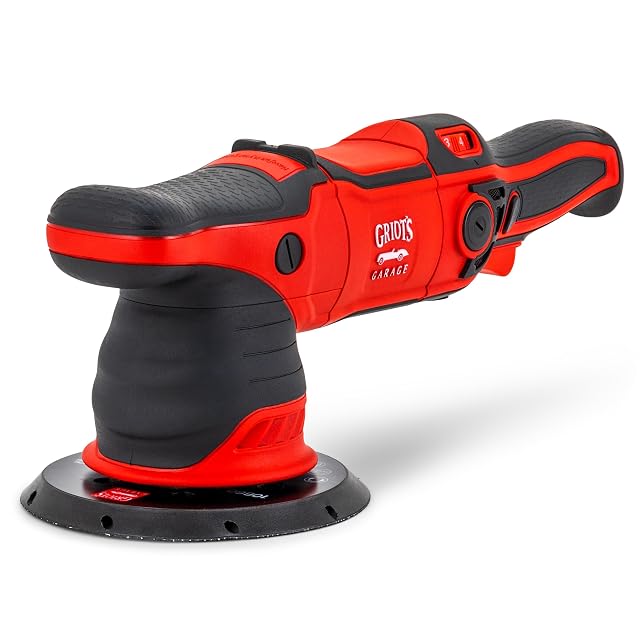
  3. Griot’s Garage G9, 1000 W, 9 mm (0.35 in) throw

    1000 W · 9 mm (0.35 in) orbit throw · 152 mm (5.98 in) vented plate, convertible to 127 mm (5 in) · 6 speeds, 2000–6400 OPM · 3 m (10 ft) quick-connect cord

    The most powerful machine here and the widest speed range, on a 9 mm (0.35 in) throw and a vented 6-inch plate.

    Best for: A first serious machine, correcting steadily on a 6-inch plate

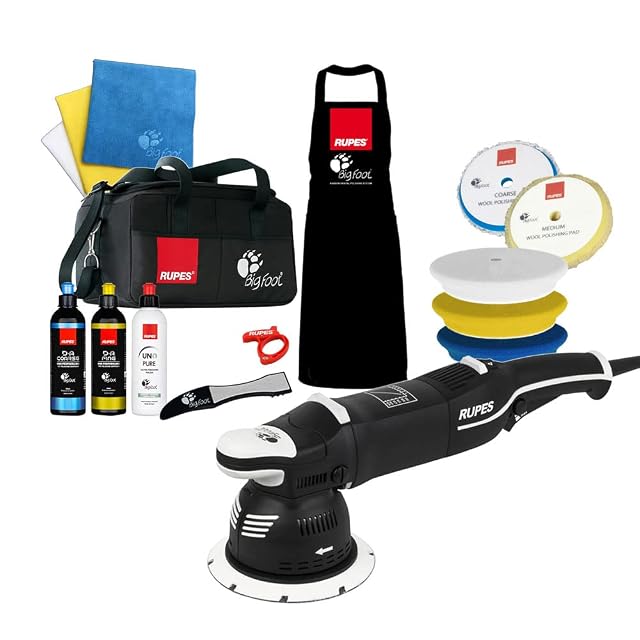
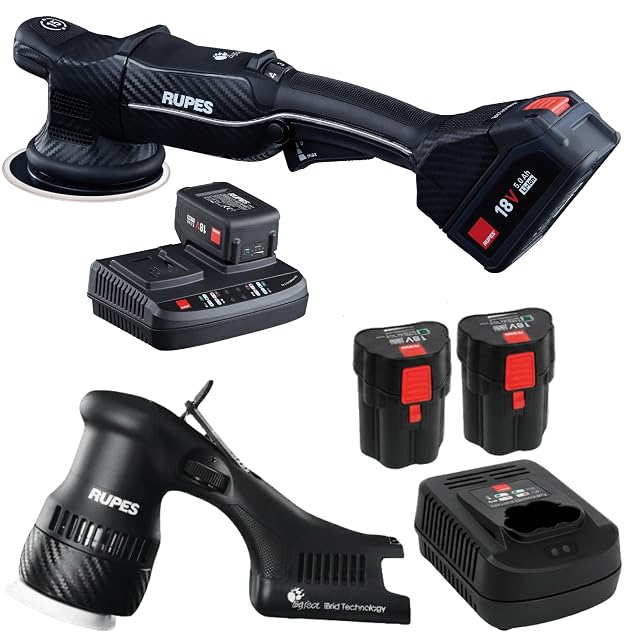
  4. RUPES BigFoot Mille, gear-driven

    Gear-driven forced rotation · clockwise · 150 mm (5.91 in) and 125 mm (4.92 in) plates both supplied · 3 compounds, 5 pads, 3 towels, apron, bag

    The only forced-rotation machine on this shelf, with both backing plates and a full compound set in the box.

    Best for: Someone who already knows their pressure, correcting curves without stalling

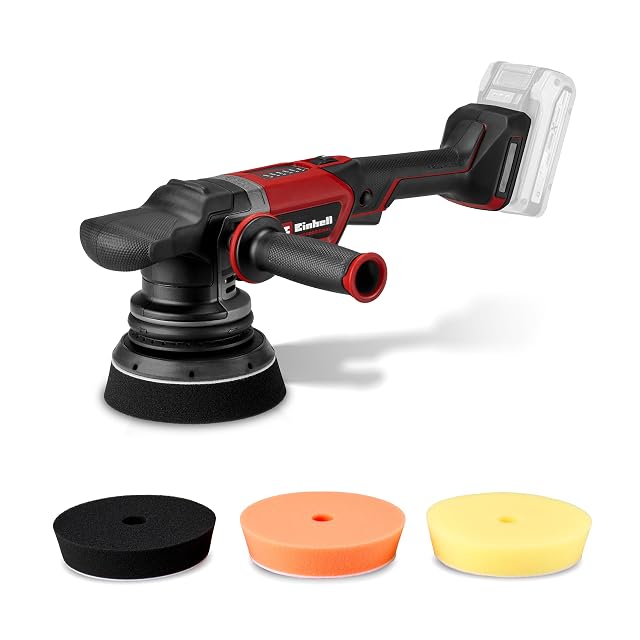
  5. Einhell CP-EP 18/125 Li BL-Solo

    Cordless 18 V Power X-Change · brushless · 8 mm (0.31 in) orbit · 125 mm (4.92 in) plate · supplied without battery

    A cordless brushless polisher with an 8 mm (0.31 in) orbit — the fine, forgiving throw — on a battery platform shared across a large tool range.

    Best for: Someone already on Power X-Change who wants to correct a panel rather than a whole car.

    8.4/10

    ≈ $340

  6. RUPES HLR15 and HLR75 iBrid, cordless pair

    Two cordless brushless machines · HLR75: 12 mm (0.47 in) orbit, 75 mm (2.95 in) plate · HLR15 for panels · LED charge indicators · fast charging

    Two cordless brushless machines in one kit: one for panels, one with a 75 mm (2.95 in) plate for tight work.

    Best for: A professional covering whole cars, where the small machine earns its place

Need by need, within dual action polishers

Covering large surfaces

The backing plate diameter decides the area treated per pass. On a bonnet, the difference is counted in tens of minutes.

Griot’s Garage 10901

Correcting without burning the clearcoat

A wide orbit cuts fast and heats the paint of a thin panel. The stated orbit throw, in millimeters, decides the margin of error left to a beginner.

Einhell 2093330

Staying manageable over a whole wing

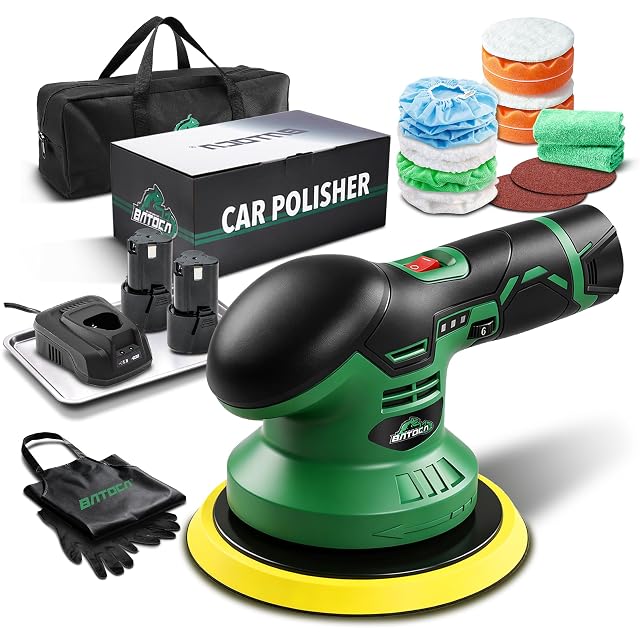
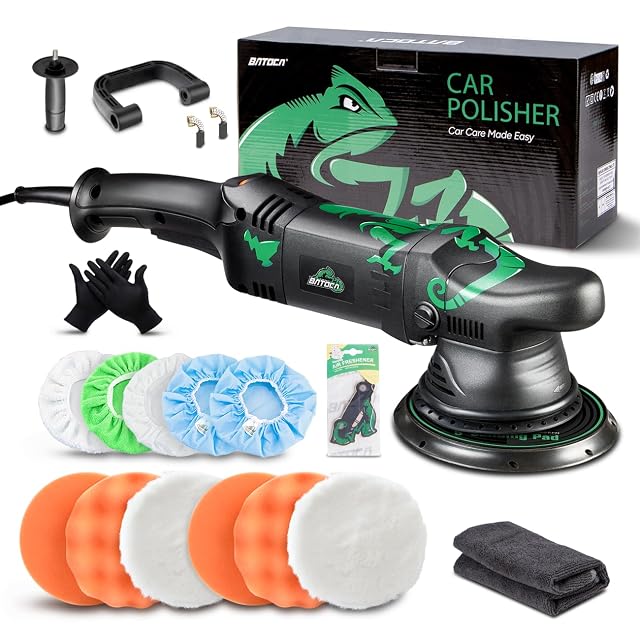
A three-kilo polisher is held out over a bonnet for twenty minutes. The stated weight decides the quality of the movement at the end of the panel, not at the start.

BATOCA B02PO37-GB-K1

Who each family suits, across dual action polishers

New to polishing
The eccentric rotation strongly limits the risk of burning through the clearcoat. That is what makes the format accessible without training.
Marked defects
A wide orbit corrects faster and generates more heat. Deep defects sometimes call for a rotary polisher, which is far more delicate.
Narrow areas
A small plate reaches pillars and sills. A large plate skips over curved surfaces.

What you gain and what you give up, on dual action polishers

Eccentric against rotary
The eccentric forgives and corrects slowly; the rotary corrects fast and burns through clearcoat in a few seconds of inattention. For an amateur, the eccentric is the only reasonable choice.
Diameter against access
A large plate covers ground quickly and does not follow curves. Many users keep two plates.
Power against control
A powerful machine does not stall under pressure and becomes harder to hold. Variable speed matters more than raw power.

Frequent questions on dual action polishers

Can the clearcoat be burned through?

With an eccentric it is difficult but possible if you dwell long in one place. With a rotary it is a matter of seconds.

Should it be washed before polishing?

Absolutely, and decontaminated. Polishing a dirty surface means rubbing the dirt into the clearcoat.

How many polishing passes should you make?

As many as needed, crossing directions, without pressing. It is the number of passes that corrects, not the pressure.

Should edges be masked?

Edges and creases have thinner clearcoat and are the first to be burned through. Masking tape protects them.

The plate gets hot, is that normal?

Moderate warmth yes; a burning surface signals too much pressure or too long a pass in one place.

Do I need several pads?

A cutting pad and a finishing pad at minimum, with the matching products. One pad does not do both.

Should it be protected afterwards?

Polishing removes a microscopic layer of clearcoat and leaves the surface bare. A protection applied afterwards preserves the result.

Can a dual-action polisher burn paint?

Far less than a rotary, because the pad stalls under pressure. The risk returns on an edge, where the contact area suddenly shrinks.

What stays with you, on dual action polishers

The eccentric forgives where the rotary burns through clearcoat in seconds: for an amateur, the choice is made. Wash and decontaminate first — polishing dirty means rubbing the dirt into the clearcoat — and mask the edges, where the clearcoat is thinnest.

Summed up: dual action polishers

  • Price: $69.99 to $1,074.99, on 4 of the 8 models.
  • Orbit throw: 5 to 15, on 3 of the 8 models.

Dual action polishers, side by side

There is no table here, and the reason is in the listings. The figure published most often across these 8 products is price, given by 4 of them — short of the four in five a column needs to compare rather than to display gaps. Each product page says what its own maker published.

Our guides on dual action polishers

Sources, and the way we rank

Specifications: manufacturer sheets for garage tools and the matching Amazon product pages. Prices and availability: Keepa.

Most recent revision in this category: October 6, 2026.

The method applied to dual action polishers

Prices quoted in these summaries are dated readings. The live price is shown next to each product.