What you are getting
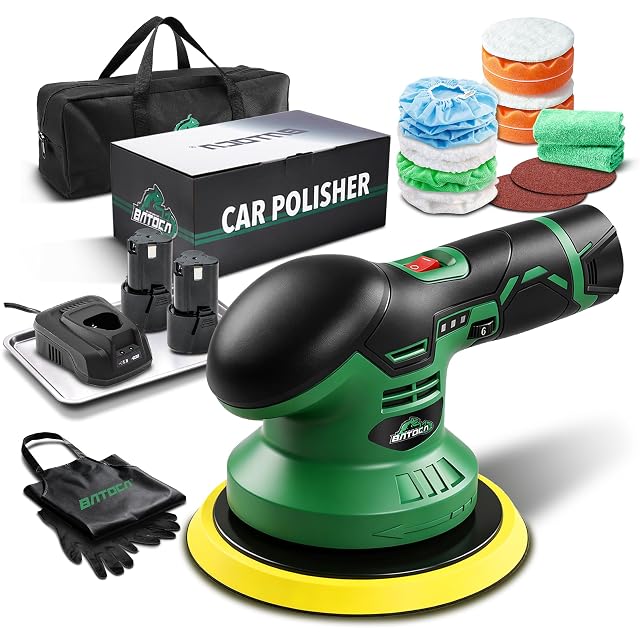
A corded random orbital polisher with a 15 mm (0.59 in) orbit, a 6-speed dial stated at 2500–5500 rpm, a motor with pure copper windings and a built-in carbon brush structure, an eccentric shaft drive, a front grip and a curved body. Accessories stated as included, without a list. 3,629 g (128 oz), 420 × 140 × 132 mm (16.5 × 5.51 × 5.20 in). $89.99.
Fifteen millimeters is the throw that covers panels, and this is the cheapest way to it
The introduction’s scale: “around 8 mm (0.31 in) is precise and slow to correct, 15 mm (0.59 in) covers panels quickly, 21 mm (0.83 in) is for large flat surfaces.”
| Machine | Throw | Price |
|---|
| BATOCA S3 cordless | 5 mm (0.20 in) | $69.99 |
| Einhell, published | 8 mm (0.31 in) | €132 |
| Griot’s G9 | 9 mm (0.35 in) | $176.99 |
| RUPES HLR75, in kit | 12 mm (0.47 in) | $1,074.99 |
| This machine | 15 mm (0.59 in) | $89.99 |
| Menzerna, published | 15 mm (0.59 in) | €130 |
Two machines on this shelf have a 15 mm (0.59 in) throw, and this one costs about two-thirds of the other. The published Menzerna page describes what the throw buys: “a 15 mm (0.59 in) throw is the general-purpose size: fast enough on panels, controllable on curves.”
The need card here states the other side: “A wide orbit cuts fast and heats the paint of a thin panel. The stated orbit throw, in millimeters, decides the margin of error left to a beginner.” Fifteen millimeters is the widest on this shelf, and the shelf’s buying advice applies: “practice on a scrap panel, not on the car.”
And it is the only machine here that states a brushed motor
“Pure copper wire with high quality motor, durable and strong power. Built-in carbon brush structure safety, long service life.”
| Machine | Motor |
|---|
| Einhell, published · RUPES iBrid kit | brushless, stated |
| This machine | carbon brush, stated |
| Griot’s G9 · Menzerna · Chemical Guys · RUPES Mille · BATOCA S3 | not stated |
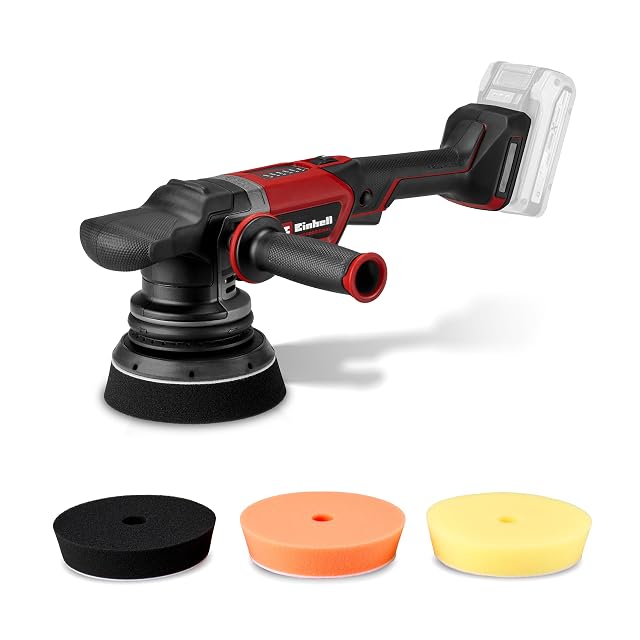
Brushes are the wearing part of a motor: they are consumable, they lose efficiency as they wear, and on a tool run for hours under load they are the first thing to go. A brushless motor has none, which is why the published Einhell page lists brushless as a reason “a modest battery does useful work”.
Stating it is honest. Pure copper windings is the other published material claim, and it is a real one — copper-clad aluminum windings are the cheap alternative and they run hotter.
What is not published is a wattage. The Griot’s G9 on this shelf states 1000 W and the published Menzerna 720 W; this states “strong power”.
Its speed range is published in the wrong unit
“6-speed variable speed control dial… Easily adjust your speed without stopping from 2500-5500RPM.”
RPM is revolutions per minute. On a free-spinning random orbital the plate’s rotation is not driven at all — it turns only from friction against the paint, which is why the pad stops turning when you press too hard. What the dial actually sets is the orbit rate.
The Griot’s G9 publishes the same kind of figure as 2000–6400 OPM — orbits per minute — which is the unit that describes the machine. Both BATOCA machines on this shelf use rpm.
Read the numbers as orbit rates and the comparison holds: 2500 at the bottom against the G9’s 2000, which is the finishing and wax speed. A machine that will not go below 2500 slings more product and heats a sealant faster.
BATOCA publishes the usage ladder, which is useful: “Low speed for waxing and buffing; Medium speed for polishing and cleaning; high speed for removing paint defects and oxidation.”
Three and a half kilograms, the heaviest standalone machine here
The shipping record gives 3,629 g (128 oz) and a 420 mm (16.5 in) length — the heaviest and longest of the four standalone machines on this shelf, the two kits aside. The maker publishes no weight.
For comparison, the published Menzerna machine states 2.8 kg (6.2 lb) and its own page notes “2.8 kg (6.2 lb) is noticeable after a full car”. The BATOCA S3 cordless machine on this shelf states 3 lb (1.36 kg).
Four hundred and twenty millimeters is also the longest body here — a machine held at the head and the tail, which suits a flat panel and is awkward against a sill.
The accessories are stated and not listed
“Professional & Complete Accessories… You can get all the supplies you need to polish your car yourself. You can get started on your DIY polishing project right away.”
No contents list, no pad count, no plate size, no compound. The reference ends KIT1, so something is in the box; what, and how much of it, is not published.
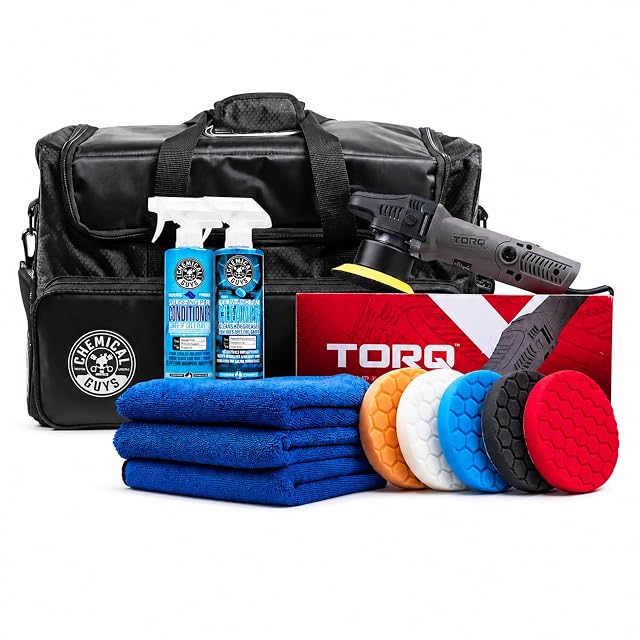
Compare the two kits on this shelf that do list: the RUPES Mille itemizes eighteen lines down to the cable clamp, and the published Menzerna machine states “Heavy Cut 1000, Medium Cut 2500 and a finishing polish, 100 ml each”.
A kit whose contents are not listed cannot be compared, which is also what this site’s polishing pads shelf says about mixed bags of unidentified pads.
And the backing plate size is not published at all
The need card on this shelf ranks machines on backing plate, largest first: “The backing plate diameter decides the area treated per pass. On a bonnet, the difference is counted in tens of minutes.”
This machine publishes none. Neither does the BATOCA S3 or the Chemical Guys kit; the other five items on this shelf all do.
On a 15 mm (0.59 in) machine the plate matters more than usual, because a wide throw on a small plate is unstable and a wide throw on a large plate is what covers a bonnet.
What is not published
No backing plate size. No power in watts. No weight from the maker. No accessory list. No brushless claim — brushed is stated instead. No plate thread. No warranty term. No noise or vibration figure.
At $89.99 it is the cheapest 15 mm (0.59 in) machine on this shelf, and the one that tells you least about what comes with it.
Availability
On sale at around $90 on the American Amazon store at the time of checking.
Prices and availability are what Keepa reported on the date this page was updated; both move.
Prices quoted in this text were read on 6 October 2026. The live price is at the top of the page.