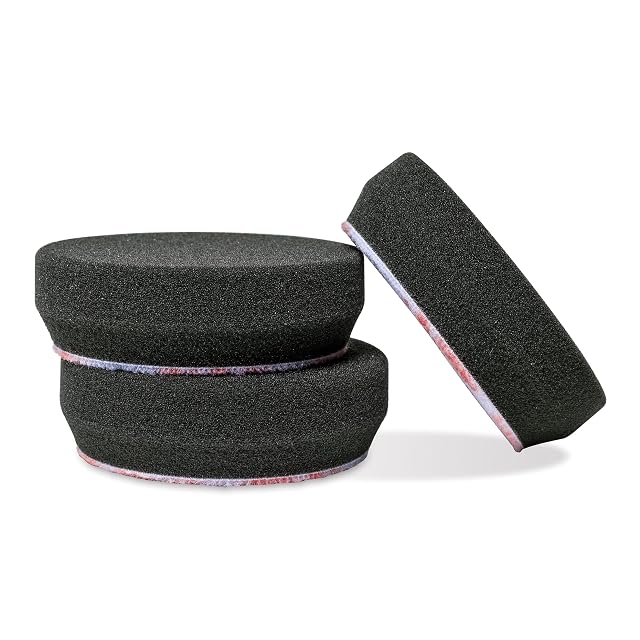
What you are getting
Three 3-inch finishing pads in premium foam with a flat, beveled face, an upgraded micro hook-and-loop backing and thermoset bonding, stated for fine polishes and sealants and for removing light swirls, scratches and defects on delicate paint surfaces. Machine washable. For hand use or a random orbital. 30 g. $19.99.
It is the third step of the sequence this shelf is named for
The line at the top of this shelf: “Cut, polish, finish — three pads for one machine.”
| Step | Griot’s pad | Stated job |
|---|
| Cut, hard clear | microfibre 5.5 in | moderate to severe scratches |
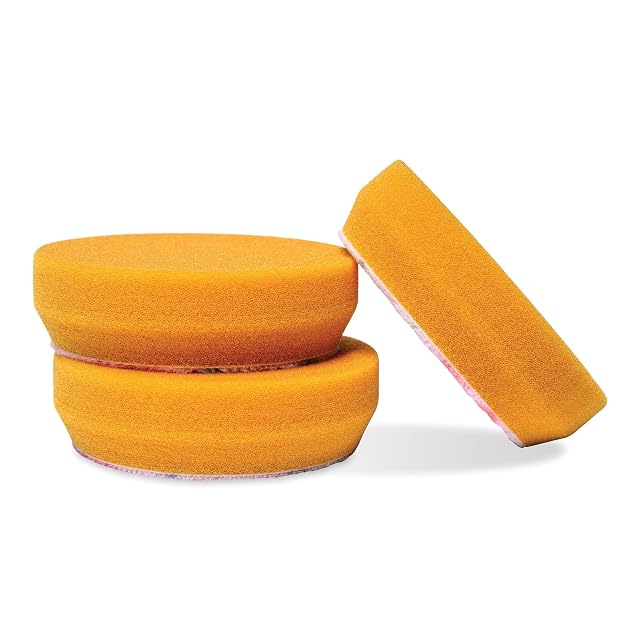
| Cut | orange 3 in / 6.5 in | light to moderate defects |
| Finish | black 3 in | fine swirls on delicate paint |
| Protect | red 3 in | waxes and sealants |
A finishing pad is softer foam with a fine polish: it removes what the cutting pad left behind, which is the faint haze a correcting pad always puts into the paint. Skipping it is why a corrected panel can look worse in direct sun than before it was touched.
“on delicate paint surfaces” is the other half. Soft single-stage paint and some black finishes mark under a correcting pad, and a finishing pad with a fine polish is the whole job on them rather than the last step.
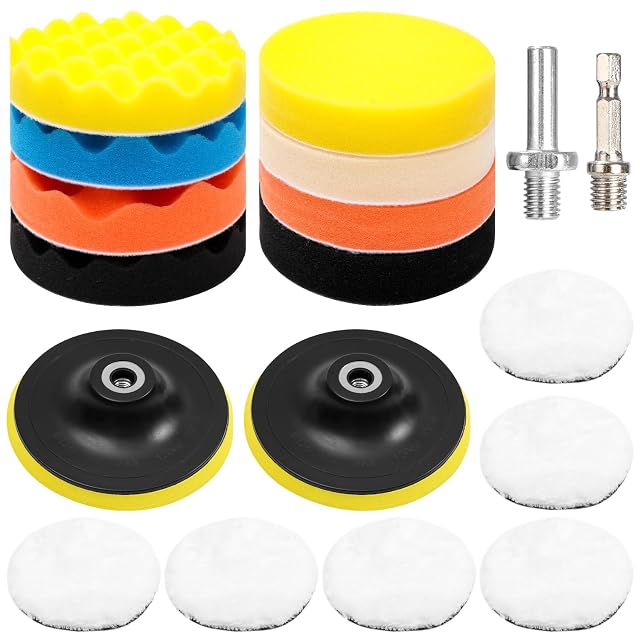
The four sets published on this shelf supply eight to twenty-two pads of assorted colors with no grading; this is the step none of them can identify.
The micro hook-and-loop face is the published difference from the orange pad
“Upgraded micro hook-and-loop system ensures firm grip and fast pad changes.”
Micro hook-and-loop has smaller, denser hooks than the standard kind. Two consequences, both relevant to the introduction’s second rule — “the hook-and-loop face has to hold under heat”:
- More hooks engaged means the grip is spread, so no single hook carries the shear load when the pad is pressed and turned.
- A finer face is thinner, which on a 3-inch pad is a real share of the total stack height and keeps the foam close to the plate.
The orange correcting pad on this shelf states a plain “hook-and-loop system”; this and the red wax pad both state the micro version. That is a published difference between two pads from the same maker at the same price, and it goes the way you would expect: the finishing pads are the ones used at the end of a long session, with the plate at its hottest.
Soft foam, named by color rather than measured
“Designed for use with fine polishes and sealants, these foam polishing pads eliminate light swirls… on delicate paint surfaces.”
The introduction: foam is graded “running from cutting through polishing to soft finishing foam” — and “no two brands agree” on the colors that mark it.
Griot’s does not publish a density here either. What it publishes is the job, consistently, across every pad on this shelf — and on a shelf where four sets publish neither a job nor a density, a stated job is the grade.
What is missing is the comparison that would settle it: how much softer this foam is than the orange pad’s open-cell foam. The orange listing names its structure; this one says “premium foam construction” and leaves it there.
Three inches, three in the pack
76 mm, which is the size for bumpers, mirror caps, pillars and the area round badges — and for finishing a panel that was corrected with a small pad.
A finishing pad lasts longer than a correcting pad, because fine polish loads it less. So three of them is a different proposition from three correcting pads: this is a pack that should outlast the cutting stage several times over.
The buying advice still applies to the one that matters: “buy several of the pad you use most, not one of each.” On most jobs that is the correcting pad, not this.
Machine washable, with the bonding that makes it credible
“Durable thermoset bonding makes these polishing pads strong enough for machine washing and repeated use without falling apart.”
A finishing pad is the one most worth washing, because what loads it is fine polish and sealant rather than cut compound — it comes clean, and it comes back working.
Washability is one of the introduction’s four comparisons, and none of the four published sets on this shelf mentions it.
And it applies sealant, which is a different job from polishing
“Whether you’re applying polish or a protective sealant, these orbital polisher pads help elevate your finish.”
A sealant is a protective layer, not an abrasive — so the pad is spreading rather than cutting, and a soft finishing foam is right for it. But the red wax pad on this shelf is stated for “waxes and sealants” too.
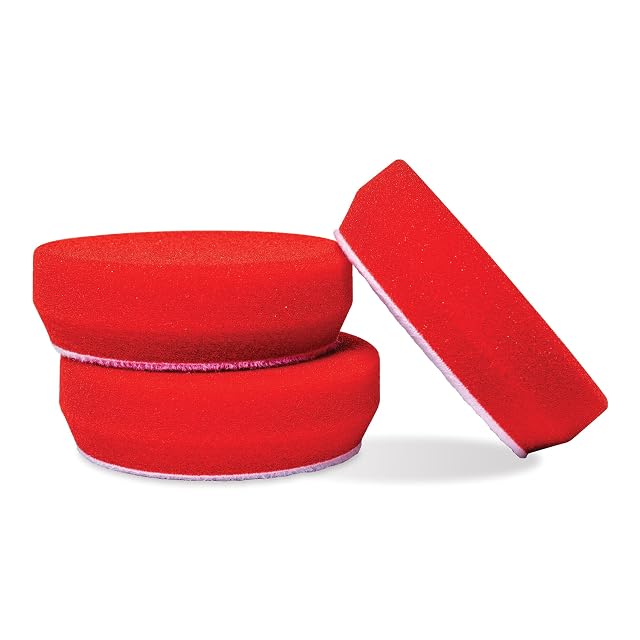
The distinction between the two, as published: the black pad is for fine polishes and sealants on delicate paint; the red is for even, streak-free application of waxes and sealants with “no high spots or missed areas”. So the black finishes and can apply; the red only applies.
If you are buying one, the black pad does both jobs less specifically. If you are correcting and then protecting, the red pad keeps sealant out of the pad you finish with — which is the real reason the system has four colors.
What is not published
No density figure and no comparison to the orange pad’s foam. No foam structure — the orange pad states open-cell and this does not. No pad thickness. No intended plate size; a 3-inch pad wants a 2-inch plate, and the only plate on this shelf is 5 inches. No maximum speed. No washing temperature.
At $19.99 for three it is the step that stops a corrected panel looking hazy, and the one most of this shelf cannot identify.
Availability
On sale at around $20 on the American Amazon store at the time of checking.
Prices and availability are what Keepa reported on the date this page was updated; both move.
Prices quoted in this text were read on 6 October 2026. The live price is at the top of the page.