What you are getting
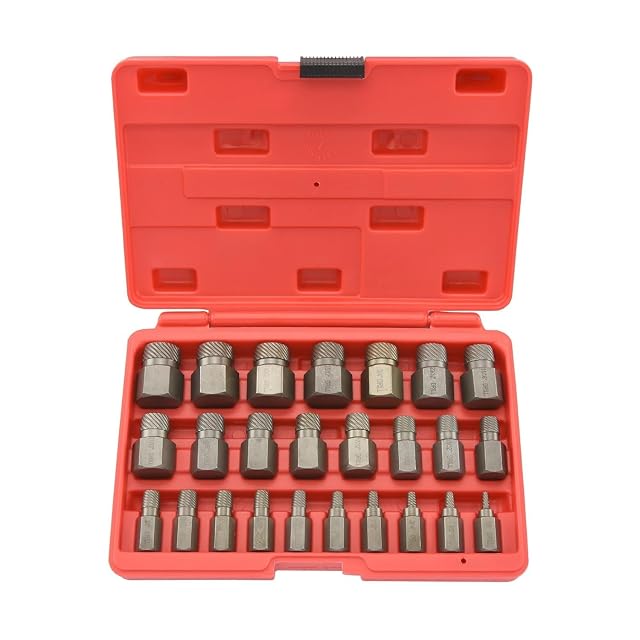
25 multispline extractors from 1/8 inch (M3.5) to 7/8 inch (M23) in 1/32-inch increments, with precision-machined hexagon heads, aggressive multiplane teeth in a left-hand spiral, in chrome molybdenum, laser-etched, in a plastic case. $47.99.
Every size carries a metric equivalent, which nothing else here does across the range
1/8” (M3.5), 5/32” (M4), 3/16” (M5), 7/32” (M5.5), 1/4” (M6.5), 9/32” (M7.5), 5/16” (M8), 11/32” (M9), 3/8” (M10), 13/32” (M11), 7/16” (M11.5), 15/32” (M12), 1/2” (M13), 17/32” (M14), 9/16” (M14.5), 19/32” (M15.5), 5/8” (M16), 21/32” (M17), 11/16” (M18), 23/32” (M18.5), 3/4” (M19.5), 25/32” (M20), 13/16” (M21), 27/32” (M22), 7/8” (M23).
Twenty-five sizes, twenty-five metric figures, published.
That is the practical difference between this and the XEWEA set in this survey, which lists the same 25 inch sizes in the same 1/32-inch steps and gives no metric equivalents. On a car with metric fasteners, reading “M13” off the listing instead of converting 1/2 inch in your head is the whole value.
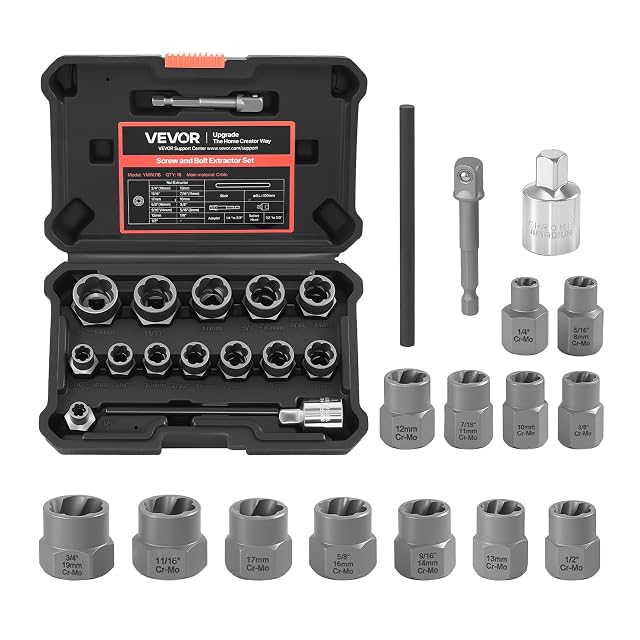
VEVOR dual-marks nine of its thirteen socket-type extractors. Across a full 25-size ladder, this is the only one.
And the heads are hexagons, machined for torque
“This damaged-screw extractor set contains 25 pieces that feature precision-engineered and precision-machined hexagon heads for applying maximum torque when paired with wrenches or sockets.”
The head is how the torque gets in, and on an extractor that is where a tool usually gives up — a round or knurled body has to be gripped with a wrench that then slips.
A machined hex takes a six-point socket, and this site’s socket sets shelf says why that matters: “six-point sockets grip the flats of a fastener and round it far less readily.” An extractor with a hex head can be driven with a breaker bar on a socket, which is as much torque as anything on this shelf will take.
XEWEA publishes no drive size at all for its 25 extractors. VEVOR uses a square socket drive with two adapters. CRENGYBL states a 3/8-inch drive.
A left-hand spiral on a multispline body, which is both of the shelf’s designs at once
“The aggressive multiplane teeth feature a left-hand spiral design to provide extra gripping power and faster threading.”
The shelf’s introduction separates the two: “Spiral flute extractors tighten their grip as they turn and suit softer, seized fasteners; straight flute designs spread the load and are less likely to expand the bolt against its thread.”
This is described as both — many teeth round the circumference, cut on a left-hand helix. In practice that means it spreads the load like a straight-flute tool and winds itself on as it turns counterclockwise, which is the undoing direction.
The XEWEA set makes the opposite case for a plain multi-spline profile, warning that “spiral extractors might slip or shear the fastener wall”. Both listings describe real behavior, and the disagreement is worth seeing: a helix bites harder and loads the fastener wall more.
Chrome molybdenum, and no hardness
“Each precisely-machined hex head is constructed from tough, resilient chrome molybdenum steel for superior performance under high torque.”
“Tough, resilient” is the vocabulary of a lower hardness, and it is the right vocabulary for the shelf’s warning: “a broken extractor is harder to remove than the bolt was — the steel is deliberately hard, which also makes it brittle.”
But no HRC figure is published, on the most expensive set here. Several of the ten items on this shelf publish one, running from 50–55 HRC up to 63–65. At $47.99 this is the most expensive American set here, and the one with the least excuse for the omission.
No drill bits and no drill size table, which here is consistent
A multispline extractor goes over a rounded head or a protruding stud. Nothing is drilled, so the shelf’s headline recommendation — “a drill size table, since the pilot hole decides everything” — does not apply.
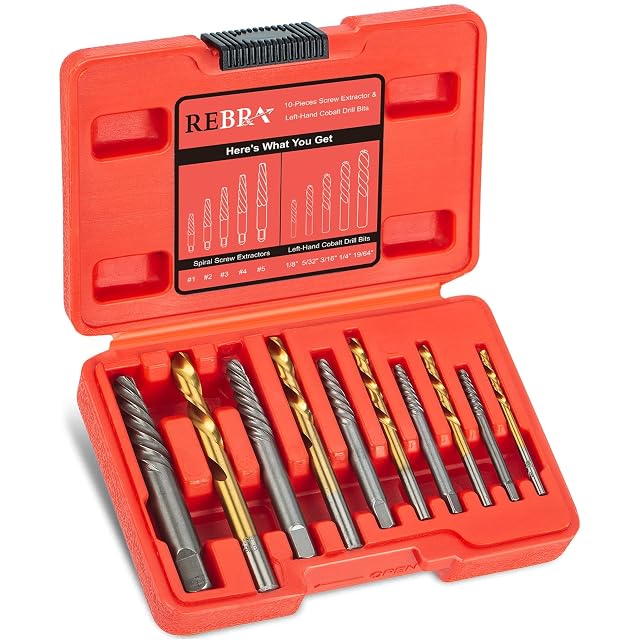
What it means in practice is that this set cannot touch a bolt that has snapped off flush. For that the shelf offers REBRA, whose five left-hand drill bits can sometimes undo the stub before the extractor is needed, and the spiral half of the CRENGYBL set.
On this shelf the two problems are covered about equally, and this set answers only one of them.
Eleven dollars more than the identical ladder
| Set | Sizes | Ladder | Metric | Hex heads | Coating | Price |
|---|
| XEWEA | 25 | 1/8–7/8, 1/32 steps | no | not stated | manganese phosphate | $36.99 |
| This set | 25 | 1/8–7/8, 1/32 steps | yes | yes | not stated | $47.99 |
Same geometry, same range, same alloy family, $11 apart. XEWEA publishes a coating and the word “forged”; this publishes the metric table and the machined hex. Neither publishes a hardness or a torque limit.
What is not published
No hardness. No torque limit. No weight and no case dimensions. No coating or finish — XEWEA names manganese phosphate and K Tool names chrome plating. No hex head size, so which socket drives them is not stated. No warranty.
At $47.99 it is the most expensive American set here, and the only one that gives all 25 of its sizes in both measurement systems.
Availability
On sale at around $48 on the American Amazon store at the time of checking.
Prices and availability are what Keepa reported on the date this page was updated; both move.
Prices quoted in this text were read on 6 October 2026. The live price is at the top of the page.