The cutting pad of a named three-color system, in the small size
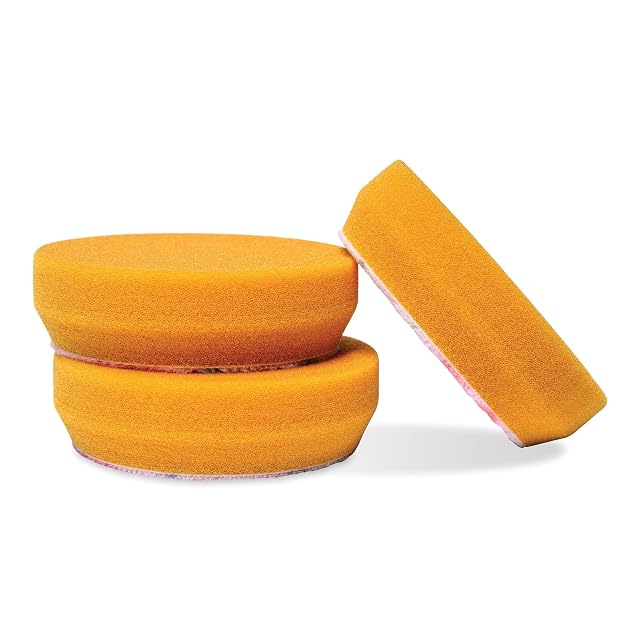
Griot’s Garage 3 in orange correcting, set of 3
The orange pad of a three-color system: light to moderate defects, in the size that reaches a bumper corner.
What you are getting
Three 3-inch correcting pads in premium open-cell foam with a beveled, flat face, thermoset bonding, a hook-and-loop backing and stated removal of light to moderate defects — swirls, haze and fine scratches. Machine washable. Stated for hand use or a random orbital. 23 g. $19.99.
It is the cutting pad of the only named color system on this shelf
The introduction’s complaint: “Foam is graded by density rather than by color — although every brand uses color, and no two brands agree on it — running from cutting through polishing to soft finishing foam.”
Griot’s publishes the whole scale, one color at a time, and uses it the same way on every item:
| Color | Stated job | On this shelf |
|---|
| Orange | light to moderate defects | this pad, and two in the conversion kit |
| Black | fine swirls on delicate finishes | the 3-inch finishing pad |
| Red | waxes and sealants | the 3-inch wax pad |
| Microfibre | moderate to severe scratches | the BOSS 5.5-inch pad |
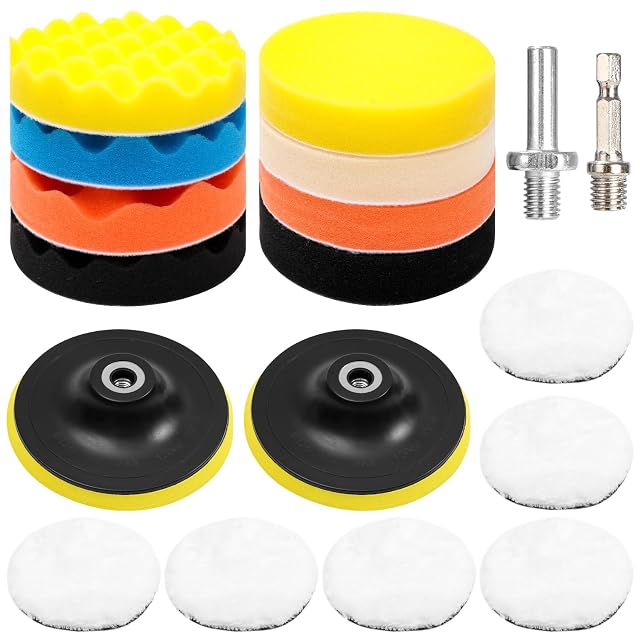
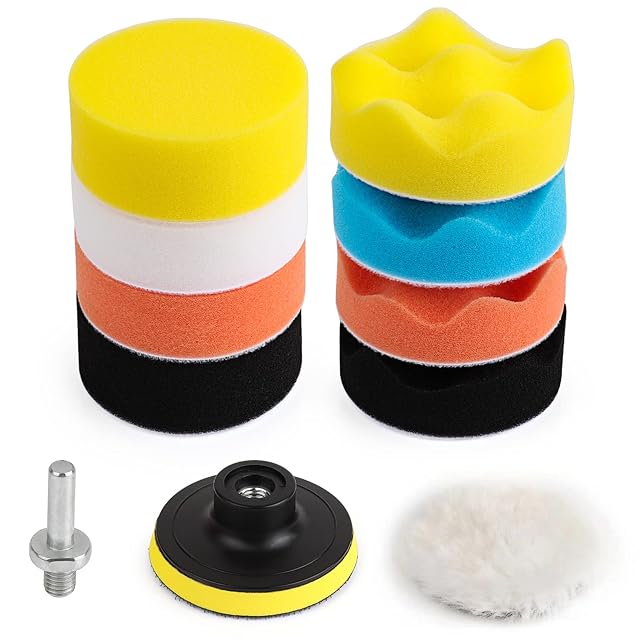
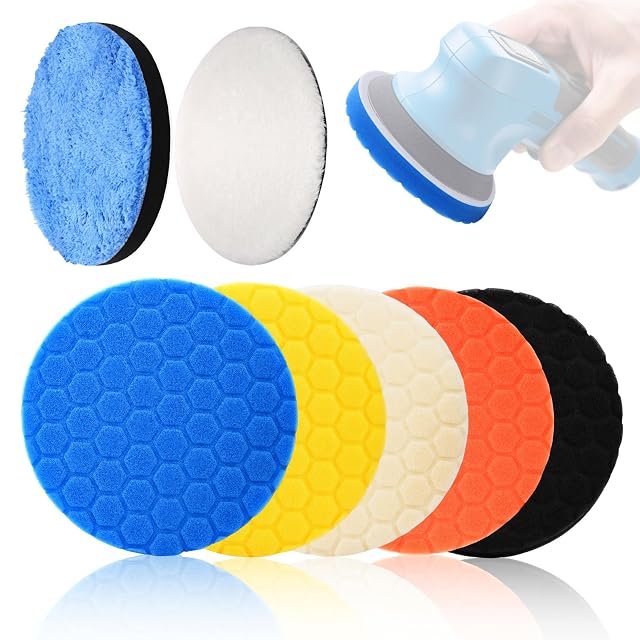
That is not a density figure, and it is a system. The four pad sets published earlier on this shelf give eight to twenty-two pads in assorted colors, and their own pages record the problem: “no density grading published” twice, and “color-coded density is not standardized between brands” once.
The practical difference: with these you buy the pad for the job. With a mixed bag you work out which color does what by trying them on your own paint.
Three inches is the size that reaches what a big pad cannot
| Item | Diameter |
|---|
| Griot’s 6.5 in correcting | 165 mm (6.50 in) |
| Lompyeu, published | 150 mm (5.91 in) |
| Griot’s microfibre and kit pads | 140 mm (5.51 in) |
| Huifoo · Meet You, published | 125 mm (4.92 in) |
| This pad | 76 mm (3 in) |
| Kshineni, published | 80 mm (3.15 in) |
Three inches is for bumpers, mirror caps, pillars, around badges and door handles — the places where most of a car’s swirl marks actually are, because they are the places a sponge gets dragged across.
It is the wrong pad for a bonnet. Crossing a door with a 3-inch pad is four passes where the 6.5-inch pad on this shelf is one, and the small pad works harder and heats faster for it.
Three in the pack is the right count at this size, and it is the buying advice on this shelf: “buy several of the pad you use most, not one of each. A saturated pad stops cutting long before it looks used, and swapping to a clean one is what recovers the finish.”
A 3-inch pad saturates fast, because there is very little foam to hold compound.
Open-cell foam, which is what a correcting pad should be
“Built from premium open-cell foam, these durable correcting pads resist tearing.”
Open cell means the foam’s bubbles connect: it takes compound into its structure and releases it under pressure, and it lets air and heat through. Closed-cell foam holds compound on the surface only, which is what a wax pad wants — and the red pad on this shelf is for wax.
So the material statement and the color statement agree, which is more than a color alone would tell you.
And the beveled flat face is a published detail about the edge
“premium foam construction with beveled, flat face promotes even product application for uniform results and easier wipe-off.”
A flat face is the cutting geometry — full contact, even pressure. A bevel at the rim is what stops the edge biting on a curve: the same idea as the half-inch pad overhang the introduction asks for, and as the chamfered plate edge in the conversion kit here.
All six Griot’s items on this shelf state a flat or beveled face. None of the four published sets describes its face shape, except the Lompyeu set’s honeycomb pattern — which is a different idea again, aimed at holding compound rather than at the edge.
Machine washable, and the bonding that allows it
“Tough thermoset bonding for long life and are machine washable for repeat use.”
Those two clauses belong together. The layer that fails on a washed pad is the glue between foam and backing, and a thermoset adhesive does not soften once cured — which is why the washability claim is credible rather than decorative.
The introduction lists washability among its four comparisons. All six Griot’s items state it; none of the four published sets mentions washing.
At $19.99 for three, washability is most of the value argument: three pads that come back are a different purchase from three that do not.
Hand or machine, which is published and worth reading literally
“These car polishing pads work with hand application or car polishers.”
By hand, a 3-inch correcting pad on a block will remove a light swirl with enough effort. What it will not do is finish evenly, which is the reason a machine exists. Read the claim as “it will not fall apart in your hand”, not as a substitute for this site’s dual action polishers shelf.
No backing plate size is published. A 3-inch pad wants a 2-inch plate under this shelf’s own rule, and the only plate sold on this shelf is 5 inches.
What is not published
No density figure or pore count. No pad thickness, where the microfibre pad here publishes 9 mm and a 1/4-inch foam layer. No intended plate size. No maximum speed. No washing temperature. No cut level relative to the microfibre pad beyond the words “light to moderate” against “moderate to severe”.
At $19.99 for three it is the cutting pad for the parts of a car that need correcting most, from the only graded system on this shelf.
Availability
On sale at around $20 on the American Amazon store at the time of checking.
Prices and availability are what Keepa reported on the date this page was updated; both move.
Prices quoted in this text were read on 6 October 2026. The live price is at the top of the page.