The last word The most completely specified set in the hub. Three sizes, every dimension published.
What lands on the bench
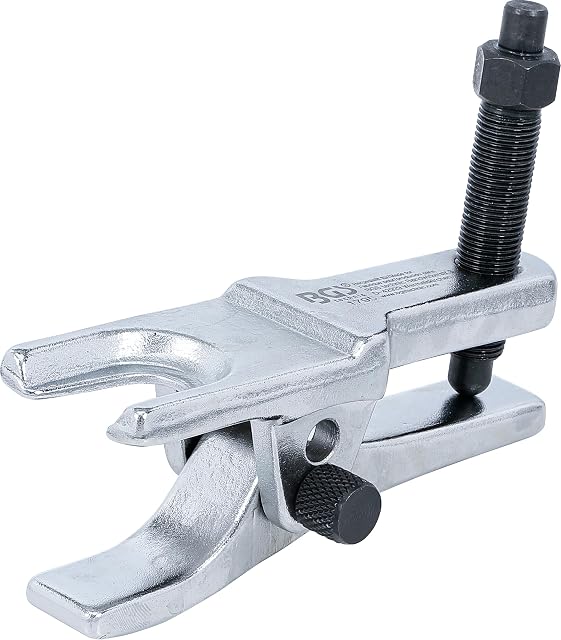
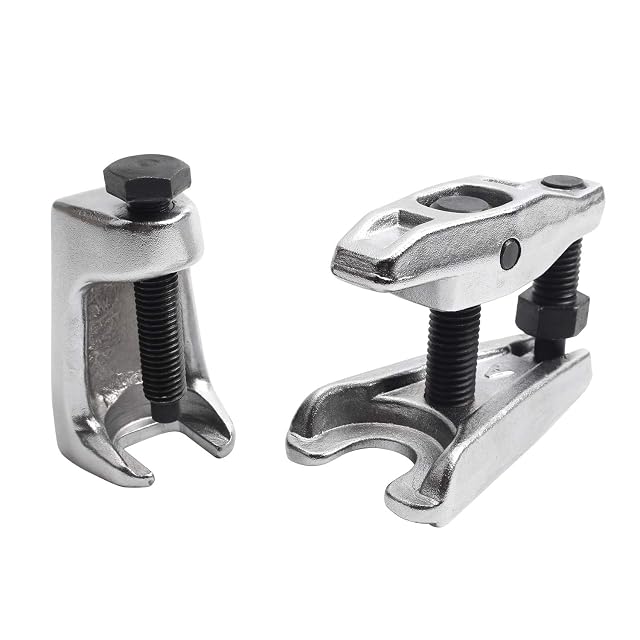
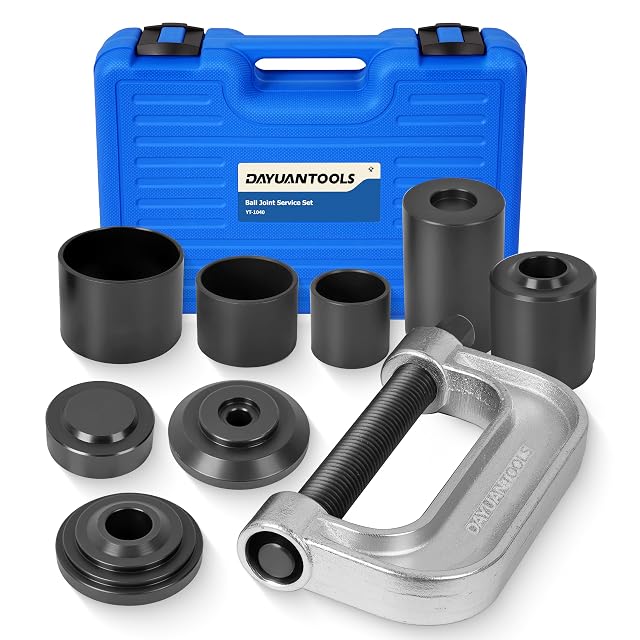
Three press-type separators with published jaw openings of 22–18, 19.5 and 19 mm (0.75 in), clamping ranges to 55 and 50 mm (1.97 in), drive sizes and thread pitches.
Why this listing is a model
Every figure that decides fit is published for each of the three tools. On a family where the most common failure is buying the wrong size, that is the specification that matters.
The tool with continuous adjustment
One of the three adjusts steplessly between 20 and 50 mm (1.97 in) rather than locking into positions. On an arm of an awkward thickness, that is what makes the difference between fitting and not.
What is not stated
Material and hardening. Elsewhere in this hub, forged and oil-hardened Cr-V is stated; here it is not.
Availability
Listed but with no offer on the American Amazon store — the reference exists there and nobody is currently selling it.
Prices and availability are what Keepa reported on the date this page was updated; both move.
What it does, and what it misses
Strengths
Every dimension of every tool published, including thread pitches and jaw depth
Three sizes covering a wide range of passenger car joints
Continuous adjustment on one of the three, which extends its coverage further
Compromises
Three tools means three things to store and to lose
No stated material or hardening process
Jaw sizes cluster around 19–22 mm (0.75 to 0.87 in), so unusual joints are still uncovered
Specifications
Tool A
Jaw 22–18 mm (0.87 to 0.71 in), drive SW21, fine thread M16 × 1.5, clamping adjustable in two positions to 25 and 55 mm (2.17 in) — stated
Tool B
Jaw 19.5 mm (0.77 in), clamping 20–50 mm (0.79 to 1.97 in), drive SW19, continuously adjustable — stated
Tool C
Jaw 19 mm (0.75 in), jaw depth 22 mm (0.87 in), width 40 mm (1.57 in), drive SW19, thread M12 × 1.75 — stated
Stated use
Ball joint pins on track rods, anti-roll bars and suspension joints
Amazon reference
B01N6NU329
EAN
1023456789670
The questions that reach us
Why does thread pitch matter on a separator?
It sets how much force one turn produces and how smoothly the tool advances. A fine thread — M16 × 1.5 here — gives more mechanical advantage and finer control, which is what you want against a stubborn taper.
What is jaw depth?
How far the jaws reach past the joint. Too shallow and the tool sits on the boot instead of on the arm, which is one of the ways separators slip.
Our score
7.8/ 10
The most completely specified set in the hub. Three sizes, every dimension published.
This one’s price among garage tools
A reference exists on these Amazon stores: France, Germany, Italy, Spain, United Kingdom, United States. Listed is not the same as in stock — availability changes daily.
Details checked on September 4, 2026.
Who should pick this one, among garage tools
Someone working on several cars who wants coverage and published dimensions.
Specifications: the manufacturer sheet for garage tools and the matching Amazon product page. Prices and availability: Keepa. Every figure on this page names its source.
20–22 mm (0.79 to 0.87 in) jaw opening · clamping range lockable at 30 and 55 mm (2.17 in) · forged · 1210 g (42.7 oz) stated
A single forged separator with its jaw opening, clamping positions and weight all published — the sort of specification a trade catalog provides and a marketplace listing does not.
Best for: A known job on a known car, where the size has already been measured.
18 mm (0.71 in) and 20 mm (0.79 in) separators · protective adapter for aluminum parts · forged Cr-V, oil-hardened stated
Two press-type separators in 18 and 20 mm (0.79 in), with a protective adapter for aluminum components — the detail that separates a tool from a hammer.
Best for: A single suspension job on a car whose joints are 18 or 20 mm (0.79 in).