What you are getting
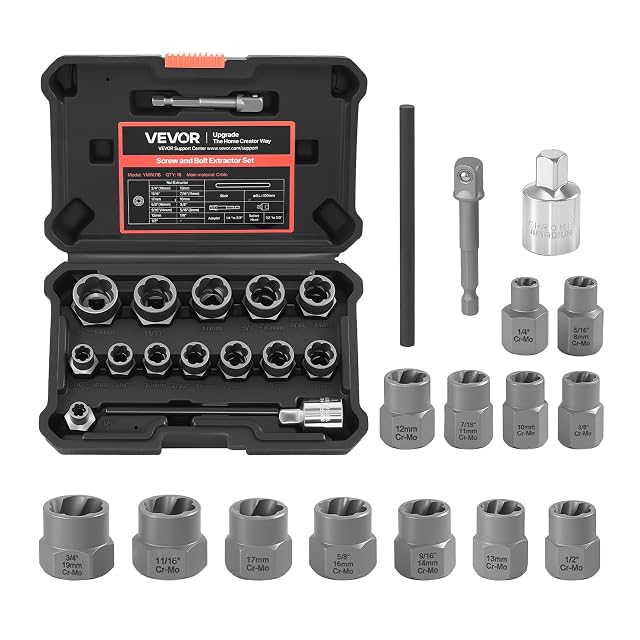
13 socket-type extractors — 3/4 (19 mm), 11/16, 17 mm, 5/8 (16 mm), 9/16 (14 mm), 13 mm, 1/2, 12 mm, 7/16 (11 mm), 10 mm, 3/8, 5/16 (8 mm), 1/4 inch — plus a 1/4-to-3/8 adapter, a 1/2-to-3/8 adapter and a 6 mm pin punch. Cr-Mo, HRC 50–55, laser-etched sizes. 866 g, 190 × 130 × 50 mm. $20.38.
Every extractor size is published, and most are marked in both systems
Nine of the thirteen carry an inch size and a millimeter equivalent: 3/4 is 19 mm (0.75 in), 5/8 is 16 mm (0.63 in), 9/16 is 14 mm (0.55 in), 7/16 is 11 mm (0.43 in), 5/16 is 8 mm (0.31 in). Three are metric only — 17, 13, 12 and 10 mm (0.39 in) — and the rest are inch only.
That matters because of what these tools do. A socket-type extractor goes over a rounded bolt head, so it is chosen by the head’s original size — and on this market a car can carry metric suspension bolts and imperial chassis bolts on the same axle.
On this shelf the size question splits sharply:
| Set | Extractor sizes published |
|---|
| This set | all 13, most dual-marked |
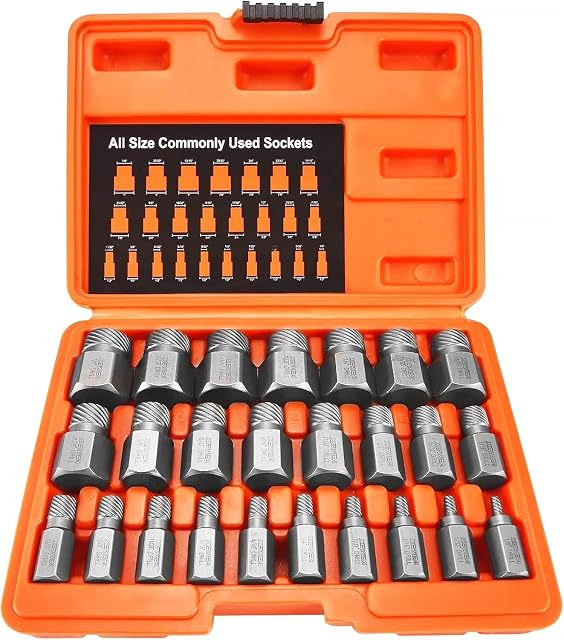
| XEWEA 25 pcs | all 25, inch only |
| NEIKO 25 pcs | all 25, inch with metric equivalents |
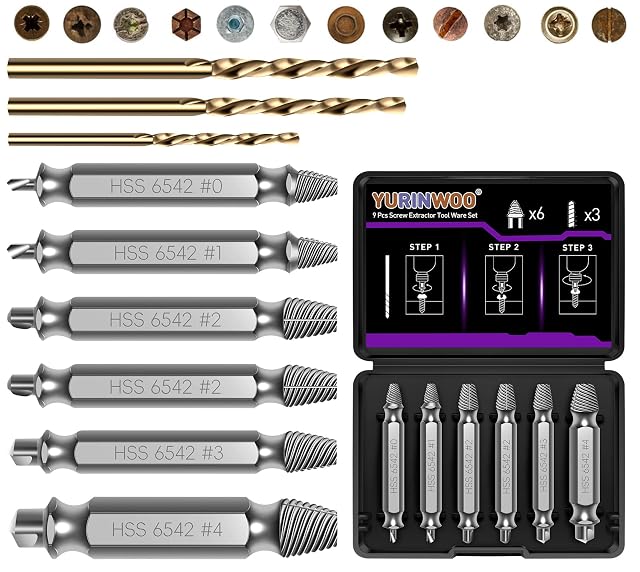
| REBRA 10 pcs | numbered #1–#5, no diameters |
| K Tool 11 pcs | all 11, as Torx T-numbers |
| CCLIFE 25 pcs, published | all 13 sockets, 8–19 mm (0.31 to 0.75 in), dual-marked |
| CRENGYBL 26 pcs | none |
CRENGYBL, which has the same kind of 13 external extractors, publishes none of their sizes.
“Made from high-quality Cr-Mo steel with HRC50-55 hardness, the bolt extractor set is designed to withstand wear, torsion, and deformation.”
Read that beside the shelf’s opening warning: “a broken extractor is harder to remove than the bolt was — the steel is deliberately hard, which also makes it brittle.”
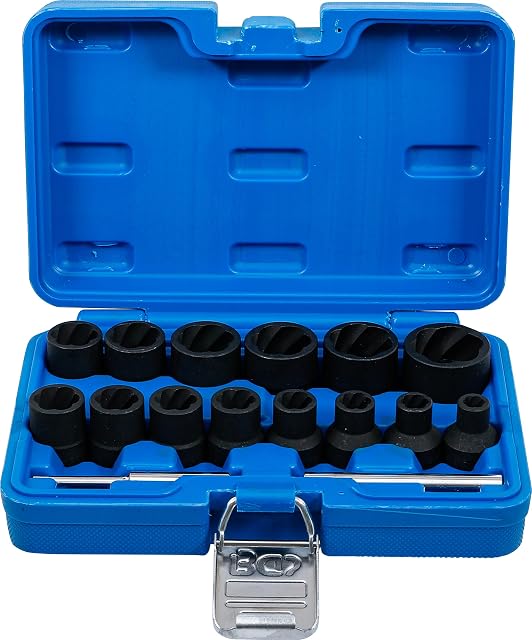
Several of the ten items on this shelf publish a hardness: the published YURINWOO set at 63–65 HRC, CRENGYBL at 58–62, the published GEDORE set at 54, and this at 50–55. Lower hardness means the tool is more likely to deform than to snap, and the word VEVOR uses is exactly that: resistance to “torsion and deformation”.
A deformed extractor comes off the bolt and goes in the bin. A snapped one stays in the bolt and cannot be drilled out. For a socket-type extractor that grips the outside of a head — where there is no hole to snap off inside — the softer figure is arguably the better choice, and it is the opposite of how a hardness number usually reads.
And it is the only item here that ships a center punch
“a 6 mm (0.24 in) pin punch… The stable biting action and included pin punch make stubborn removals more straightforward with less trial and error.”
The shelf’s buying advice: “drill straight and centered, and take the time to punch the center first. An off-center pilot hole turns a bolt extraction into a thread repair.”
That advice is for drilling, and this is the one set on the shelf that supplies the punch — while being a set that needs no drilling at all. The two sets that do need a pilot hole, REBRA and CRENGYBL, ship drill bits and no punch.
A pin punch also does the other job named here: driving the remains of a sheared bolt out of a hole once the head is off.
Plum-shaped flutes, which is the geometry stated
“The plum-shaped stripped bolt extractor design with internal biting threads grips tightly onto rounded, rusted, or stripped fasteners.”
A plum-blossom profile is a set of lobes rather than teeth, with a slight taper, so the extractor wedges down onto a rounded head and bites harder as torque rises. It is the external cousin of the spiral idea the shelf describes: “Spiral flute extractors tighten their grip as they turn.”
The cost is the same one: a tapering grip that bites harder also holds harder, so getting the extractor back off a bolt head often needs the punch.
The XEWEA set here uses a multi-spline profile instead and makes the opposite argument — 360 degrees of grip “where spiral extractors might slip or shear the fastener wall”.
Two adapters, and torque wrench and drill use stated
“compatible with torque wrenches and electric drills. The included 1/4” to 3/8” and 1/2” to 3/8” adapters allow flexible setups.”
Three drive sizes from one set of extractors, which is what the adapters are for: a 1/2-inch breaker bar for the seized one, a 1/4-inch ratchet where there is no room.
“Compatible with torque wrenches” is a strange claim on an extraction tool — a torque wrench measures a tightening torque to a target, and extraction is about applying as much as the tool will take. Reading it as “takes a 3/8-inch square drive” is the sensible interpretation, and the listing does not publish a torque limit, which is the figure that would matter.
What is not published
No torque limit, on a tool sold for impact and breaker-bar use. No coating — XEWEA publishes manganese phosphate. No drill size table, which is moot here since nothing is drilled. No bolt head size ranges: an extractor marked 13 mm fits a head rounded down from 13 mm, and how far down is not stated. No warranty.
At $20.38 it publishes every size it contains, at the softer hardness, with the punch nobody else supplies.
Availability
On sale at around $20 on the American Amazon store at the time of checking.
Prices and availability are what Keepa reported on the date this page was updated; both move.
Prices quoted in this text were read on 6 October 2026. The live price is at the top of the page.