What you are getting
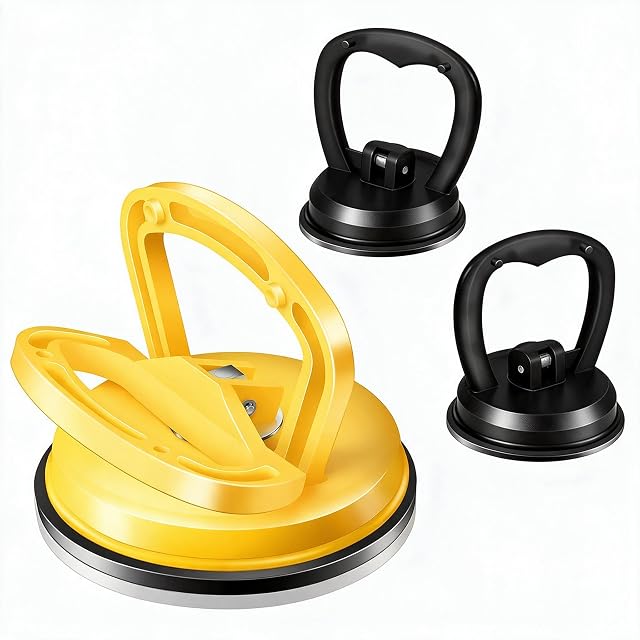
Three suction cups — one 4.5-inch large puller with a stated 110 lb horizontal and 77 lb vertical maximum suction, and two 2.2-inch small ones — in high-quality ABS with high-strength natural rubber and a strong metal core, plus a microfibre wash mitt, a nano cloth scratch remover and buffing polishing pads. No glue, no tabs. $17.99.
It is the same kit as the HORFUTY cups, with lower numbers and three extras
| Tiantanghu | HORFUTY |
|---|
| Price | $17.99 | $16.99 |
| Large cup | 4.5 in | 4.5 in |
| Small cups | two at 2.2 in | two at 2.2 in |
| Horizontal | 110 lb | 130 lb |
| Vertical | 77 lb | 80 lb |
| Materials | ABS, natural rubber, metal core | not stated |
| Extras | mitt, nano cloth, polishing pads | none |
| EAN | 0602397661187 | 0602397661620 |
The shared 06023976 EAN prefix means one company registered both numbers. The cup sizes match, the five published cautions are nearly identical, and the pull ratings do not: 110 against 130 horizontal and 77 against 80 vertical.
Both sets of figures are the makers’ own. Neither is verified here, and the discrepancy is itself the useful information: on two listings of the same cups from the same registrant, the pull rating moved by 15%. Read these numbers as claims.
What this one adds for $1.00 is named materials and three car-care items.
And naming the materials is worth more than it looks
“made of high quality ABS material and durable high strength natural rubber… durable natural rubber and strong metal core, the handle will not break easily… the rubber at the bottom provides strong suction and is seamless, so it will not scratch the paint.”
Three materials for three parts, and each is the right one.
Natural rubber rather than a synthetic is the correct choice for a vacuum cup: it stays compliant in the cold, where cheap PVC and TPR stiffen and stop sealing. A cup that will not seal at five degrees is a cup that does not work in the season when dents happen.
A metal core in the handle is the other claim that matters. These cups work by an over-center lever that pulls the cup’s center up — a plastic linkage flexes under 36 kg (79.4 lb) and eventually snaps, usually at the pivot. The HORFUTY listing says nothing about either.
Seamless rubber at the contact face is the paint claim: a molding line across the sealing face both leaks and prints a mark.
It publishes the same five cautions, including the one that forbids use
“The dent puller kit for car must be used on a clean, smooth, flat, non-porous, and dry surface… make sure there is good suction before lifting and confirm carefully that the dent area is greater than the diameter of the suction cup. Before using the car dent puller, please pour hot water on the dent.”
The introduction makes this the test: “it has clear limits that the honest kits state: a smooth, shallow dent with intact paint responds; a creased dent, a dent on a body line, or one with cracked or flaking paint does not.”
The condition that does the most work is the diameter one. A 4.5-inch cup over a 2-inch ding seals on the sound metal around it and pulls that instead — which is why a suction cup is a tool for large, shallow damage and nothing else. The $35.99 to $59.98 glue kits on this shelf exist for everything smaller or sharper.
The method is published step by step, which two kits here do
“Heat the dent area and clean the surface and let the kit dry. Next, adjust the handle of the car dent remover to the detached state. Then press the kit down perpendicular. Finally, quickly pull the double handle to the upward position.”
Four steps, and two details in them are the ones that decide whether it works.
Perpendicular is the first: a cup pressed on at an angle seals on part of its face and lifts off at the first pull. Quickly is the second: a vacuum cup leaks slowly, so the pull has to come before the seal decays — slow and steady loses the vacuum and the dent.
The BESTGLOAL and VEVOR kits on this shelf publish a four-step method for the glue process; this is the only published method for the suction process.
The wash mitt, nano cloth and polishing pads are from three other shelves
the first bullet says the kit is equipped with a microfibre car wash mitt, a nano cloth car scratch remover and buffing polishing pads “you need when dealing with dents for your maximum convenience”.
A dent repair ends with a panel that needs washing and, where a cup has been dragged, polishing. The polishing pads on this site have a shelf of their own, as do the machines that drive them.
Whether they belong in this box is a fair question — the KUIMIT sander on this site’s body sanders shelf includes a wash mitt in the same spirit — and at $1.00 over the alternative they cost almost nothing.
A “nano cloth scratch remover” is the one to treat carefully. A cloth that removes scratches removes clear coat, which is the same mechanism as this site’s polishing pads shelf describes at length, and no grade or abrasive is published for it.
But it is still a suction cup, with the lowest published pull on this shelf
77 lb vertical is 35 kg, and it is the lowest of the two published figures here.
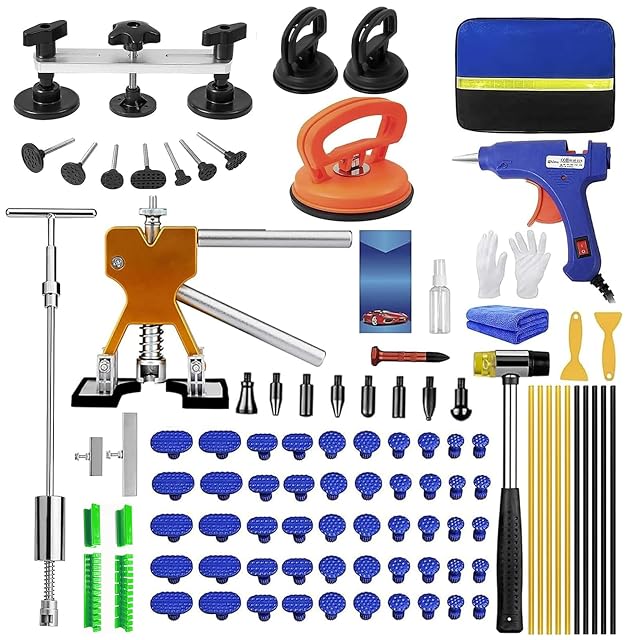
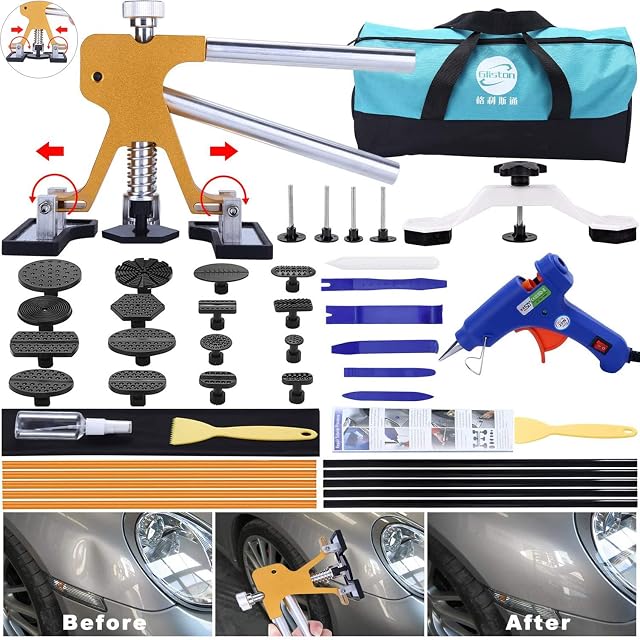
No glue, no tabs, no lifter, no bridge, no slide hammer. The introduction’s controlled method — a bridge puller that “pushes against the panel to lift a glued tab” — needs a tab, and there is none in this box.
So the capability is: a large, smooth, shallow dent on a flat panel with intact paint. Outside that, the GLISTON, BESTGLOAL, VEVOR and Reboun kits on this shelf are what the job needs.
What is not published
No water temperature for the heating step. No dent depth limit, only the diameter condition. No handle mechanism detail beyond the four steps. No grade or abrasive for the nano cloth. No pad sizes for the polishing pads. No warranty. No glue, tabs or precision puller — which is the product, not an omission.
At $17.99 it names its materials and publishes its method, and it pulls 3 lb less than the kit beside it.
Availability
On sale at around $18 on the American Amazon store at the time of checking.
Prices and availability are what Keepa reported on the date this page was updated; both move.
Prices quoted in this text were read on 6 October 2026. The live price is at the top of the page.