What you are getting
A hand longboard sander, 16.5 × 2.75 inches (419 × 70 mm), with a wooden handle, a durable steel body and a rubber pad that conforms to contours. It takes PSA sticky longboard paper or dry longboard paper held with clips. 582 g (20.5 oz). $23.99.
Nine of the ten items here are pneumatic random orbital sanders. This is a board you push.
The reason it is on the shelf is geometry. A random orbital sander follows the surface it is on: press it onto a low spot and it sands the low spot. A longboard spans the low spot. Sixteen and a half inches of rigid board bridges a hollow and cuts the high ground either side of it, which is the only way filler is made flat rather than smooth.
That distinction is the whole of bodywork. A panel can be perfectly smooth and visibly wavy, and the wave only shows up under a topcoat in daylight — at which point the fix is to flat it and spray again. An orbital sander will not find it; a longboard will.
The introduction’s own framing is the clue: “small orbits (2 to 3 mm (0.08 to 0.12 in)) for finishing, larger ones for leveling.” A longboard is the limit case of that sentence — the stroke is as long as your arm.
And it takes both kinds of paper, by two different methods
“Can Use PSA Sticky Longboard Paper Or Dry Longboard Paper with Clips.”
PSA paper has an adhesive back and sticks to the board. Dry paper is plain sheet held at each end by sprung clips — cheaper, cut from a roll, and replaced in seconds without peeling adhesive off the pad.
On a tool used for long dusty sessions the clip option matters more than it sounds: a filler-dust-covered PSA pad stops sticking, and then the paper creeps mid-stroke.
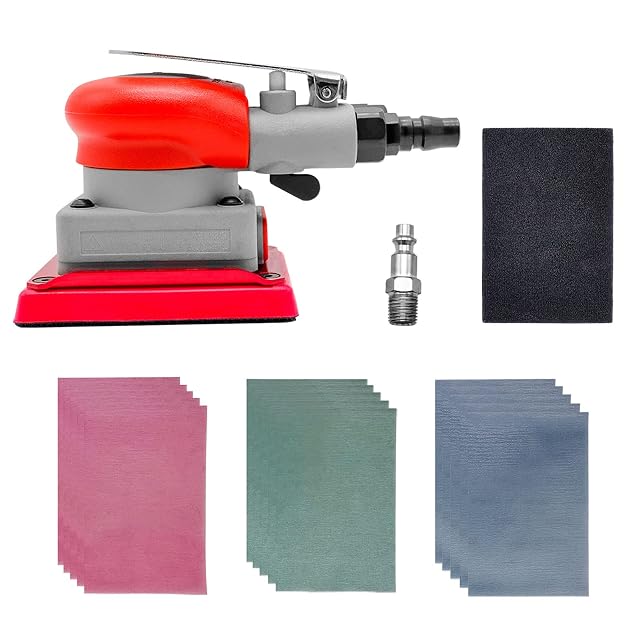
The TCP SA7336 air sander on this shelf answers the same compatibility question with two backing plates, one PSA and one hook-and-loop. These are the only two listings of ten that address which abrasive fits — on a shelf whose buying advice is “match the pad hole pattern to your abrasive discs before buying either”.
The rubber pad is the one specification in three bullets
“Rubber Pad Conforms To Contours.”
That is the whole of bullet one, and it is the right thing to say. A rigid board on a curved panel bridges the curve and cuts the edges; a board with a rubber face flexes enough to follow a crown while still spanning a hollow.
Which is a compromise, and the listing does not say how much rubber. There is no pad hardness, no thickness and no shore figure — and on a longboard, pad hardness is the specification.
Three bullets in total: the pad, the steel body, the paper options. It is the shortest listing on this shelf by a distance, and almost everything it leaves out is also missing from the nine machines.
Five hundred and eighty-two grams, which is lighter than most of the machines
| Tool | Stated or recorded weight |
|---|
| This longboard | 582 g (20.5 oz) (shipping record) |
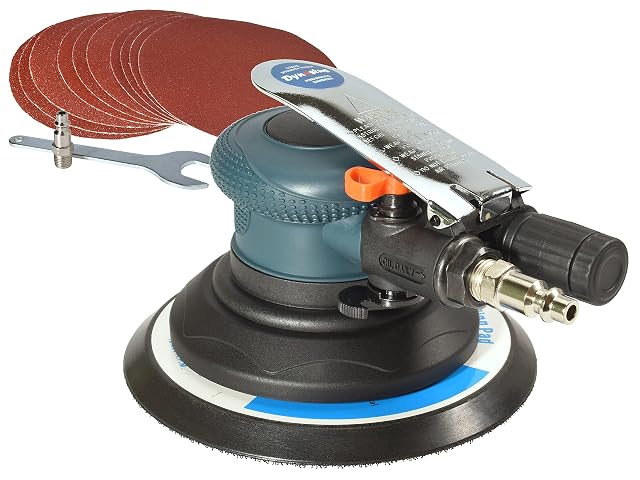
| Dynastus 6 in | 1.85 lb (839 g) |
| TCP SA7336 | 1.89 lb (857 g) |
| Stahlwerk, published | 1 kg (2.2 lb) |
| KUIMIT | 3.1 lb (1.41 kg) |
For a tool worked with both hands over a bonnet, light is right — and the 582 g (20.5 oz) above is the shipping record rather than a maker figure, as no weight is published.
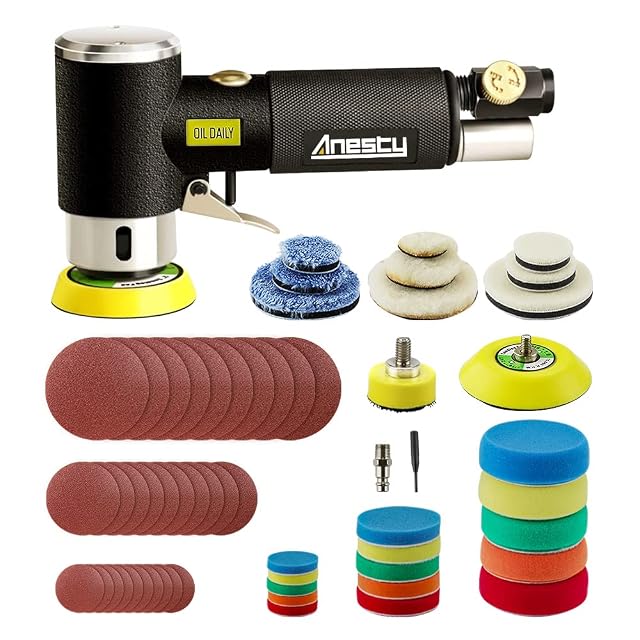
Four hundred and nineteen millimeters of board is the figure that matters more. It is long enough to span a door’s worth of filler and too long to work inside a wheel arch or around a lamp aperture. For those, the ZFE mini sander on this shelf runs 1, 2 and 3-inch pads and the published Anesty kit 25, 50 and 75 mm.
And it needs no compressor at all
Every other powered item on this shelf is pneumatic, and only the TCP SA7336 publishes what that costs — 4.5 CFM at 90 PSI, with a 2 hp compressor suggested.
This needs a forearm. On a shelf where the real barrier to entry is a compressor that can keep up, a $23.99 hand tool that does the job no machine does is the sensible first purchase — and the buying order most body shops actually follow: level by hand, finish by machine.
What is not published
No pad hardness or thickness. No paper width or length, so which rolls fit is not stated beyond “longboard paper”. No weight from the maker. No clip detail — how many, sprung or cam. No handle length. No warranty. And, inevitably, no orbit, no speed, no extraction, no vibration: it is a board.
At $23.99 it is the cheapest item on this shelf, it has three bullets, and it is the only one that will tell you your filler is not flat.
Availability
On sale at around $24 on the American Amazon store at the time of checking.
Prices and availability are what Keepa reported on the date this page was updated; both move.
Prices quoted in this text were read on 6 October 2026. The live price is at the top of the page.