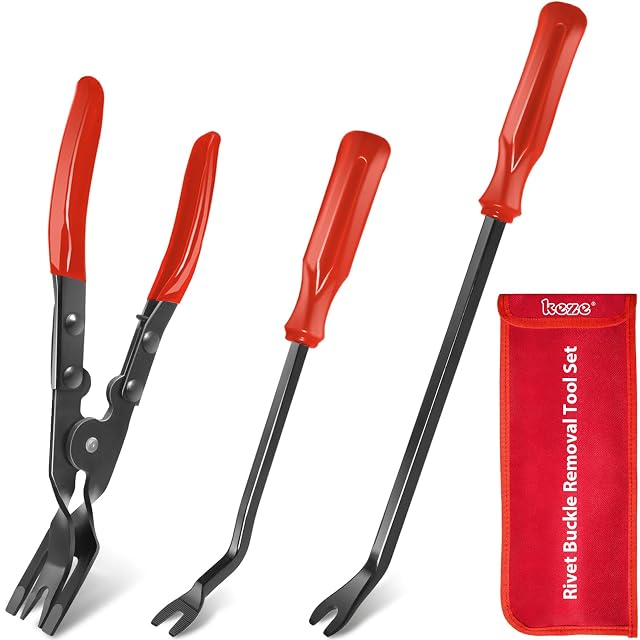
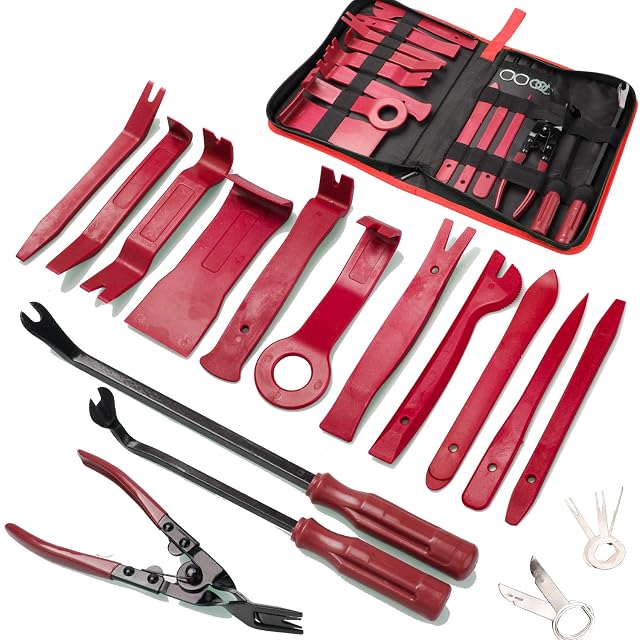
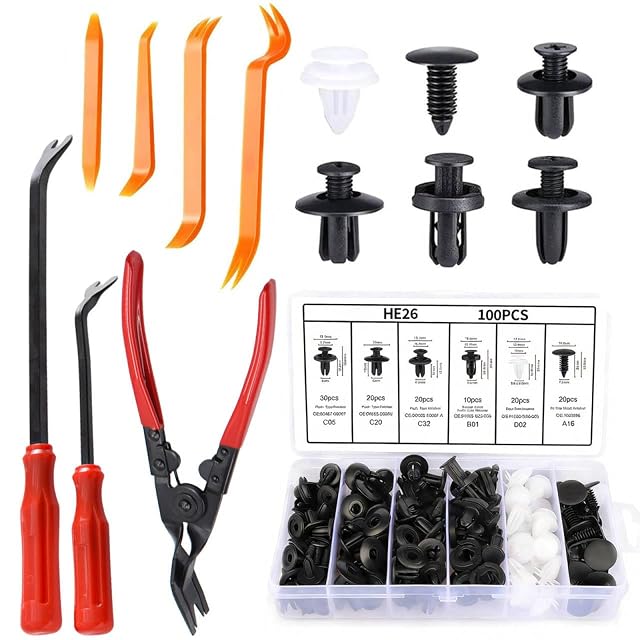
What you are getting
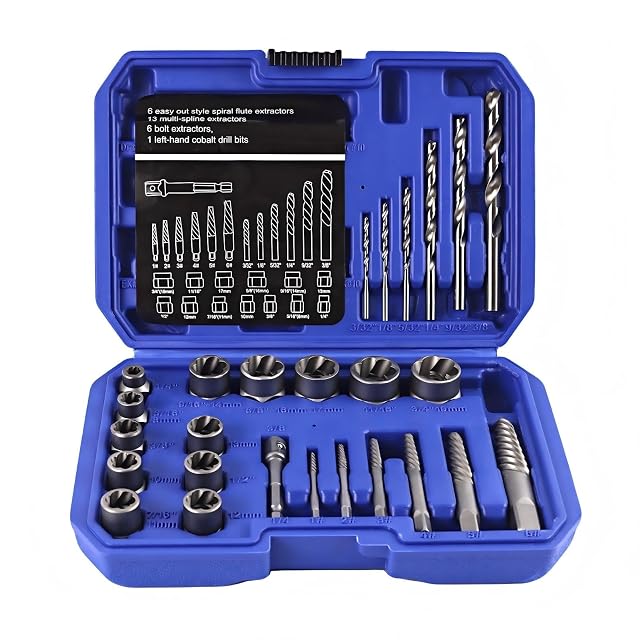
26 pieces in four groups: 13 bolt extractors on a 3/8-inch drive, 6 spiral screw extractors, 6 right-hand HSS drill bits with a titanium coating and a 135-degree point, and a 1/4-to-3/8-inch hex adapter. Chrome molybdenum, heat treated, 58–62 HRC. 1,179 g. $26.99.
It is one of two sets here that cover both kinds of failure
The two problems look alike and need opposite tools:
| The fastener | The tool | In this set |
|---|
| Head rounded but still there | external extractor, no drilling | 13 bolt extractors |
| Bolt snapped off flush | drill, then internal spiral extractor | 6 bits + 6 spiral extractors |
Every other American item here does one or the other: VEVOR and K Tool are external only, REBRA is drill-and-extract only, XEWEA and NEIKO are external multi-spline sets. The published CCLIFE set is the other one that answers both — thirteen spiral extractor sockets on a 3/8-inch hex drive, six #1–#6 extractors and six HSS drills.
For a garage that meets both in a year, that is the argument, and at $26.99 it is cheaper than either of the two 25-piece multi-spline sets on this shelf.
And it publishes the second-highest hardness here, which the shelf treats as a warning
“Forged from high-strength chrome molybdenum steel with heat treatment, our extractors offer exceptional hardness (58-62 HRC).”
The introduction to this shelf opens with the risk: “the reason to choose carefully is that a broken extractor is harder to remove than the bolt was — the steel is deliberately hard, which also makes it brittle.”
So 58–62 HRC is not simply a better number than VEVOR’s 50–55 HRC. It is further along the same trade:
- A harder extractor bites a hardened bolt instead of skidding off it.
- A harder extractor snaps instead of deforming, and a snapped extractor inside a bolt hole cannot be drilled out, because it is harder than any drill bit you own.
Several of the ten items on this shelf publish a hardness, and together they lay the range out: the published YURINWOO set at 63–65 HRC, this at 58–62, the published GEDORE set at 54 and VEVOR at 50–55. GEDORE publishes the figure without describing the trade. Which end you want depends on whether the fasteners you lose are hard or merely rusted — and that is a judgment the listing cannot make for you.
But its drill bits are right-handed, which is the opposite of what the shelf recommends
“Right-hand Drill Bit Design: HSS material with titanium coating… The 135 degree angle makes bits with sharp thread easier to cut into the workpiece.”
The shelf’s introduction: “Several sets pair extractors with left-hand drill bits, which sometimes remove the bolt before the extractor is needed.”
A right-hand bit turns clockwise, which is tightening torque on a stuck stub. It drills the pilot hole and does nothing towards undoing the bolt. A left-hand bit turns counterclockwise and can back the stub out while it drills.
REBRA’s set, at $12.99, has left-hand bits — cobalt HSS, five of them, each named against an extractor — as do the published CAINCAY and YURINWOO sets.
CRENGYBL’s bits are better in one respect: titanium-coated and six sizes rather than five. They are simply pointed the other way.
And the six bits are not matched to the six extractors
Six drill bits, six spiral extractors, and nothing in six bullets that says which goes with which.
The shelf’s introduction: “The most useful thing a set includes is not a tool at all: a drill size table, since the pilot hole decides everything.”
No item on this shelf publishes a table. REBRA at least lists its five bits in order against its five extractors in order, so the pairing can be read off. Here the pairing has to be worked out by trying an extractor in a hole, which is the one experiment the shelf’s buying advice warns against: “an off-center pilot hole turns a bolt extraction into a thread repair.”
Nor are the bit sizes themselves published — six bits, no diameters.
The spiral flutes are described the way the shelf describes them
“Spiral flutes embed themselves to increase grip as resistance increases, easily spin embedded broken bolts and damaged screws out based on drill hole.”
The introduction: “Spiral flute extractors tighten their grip as they turn and suit softer, seized fasteners; straight flute designs spread the load and are less likely to expand the bolt against its thread.”
That is the same mechanism stated from both sides, and the second half is the cost: a spiral extractor wedging itself in a drilled hole pushes the remains of the bolt outwards against the thread it is stuck in. On a soft seized stud it works; on a hard one it tightens the jam.
The XEWEA set in this survey argues the other case directly, saying its multi-spline profile holds “where spiral extractors might slip or shear the fastener wall”.
“The standard 3/8-inch drive with a 1/4-to-3/8-inch hex adapter works with impact wrenches, tap handles, and ratchet wrenches.”
VEVOR’s 13 external extractors run the same way and publish their sizes — 1/4 to 3/4 inch, dual-marked in millimeters. CRENGYBL publishes 13 extractors and no sizes, which on the half of the set that needs no drilling is the figure a buyer needs most.
At 1,179 g (41.6 oz) it is the heaviest set here that publishes a weight, which is what 26 steel pieces in four groups weigh — against 866 g (30.5 oz) for VEVOR’s 16 and 318 g (11.2 oz) for K Tool’s 11.
What is not published
No extractor sizes, for either the 13 bolt extractors or the 6 spiral ones. No drill bit sizes. No drill size table and no bit-to-extractor pairing. No case dimensions, where four items here publish them. No torque limit, despite stating impact wrench use. No center punch, which only VEVOR supplies.
At $26.99 it is the only set here that handles a rounded head and a snapped bolt, and its hardness is a choice rather than an upgrade.
Availability
On sale at around $27 on the American Amazon store at the time of checking.
Prices and availability are what Keepa reported on the date this page was updated; both move.
Prices quoted in this text were read on 6 October 2026. The live price is at the top of the page.