What you are getting
1600 peak amps for 12 V WET, GEL and AGM batteries on 4, 6 and 8-cylinder engines, a 120 PSI digital inflator with AUTOSTOP and a 10-minute auto shut-off, a 25 W USB-C and 15 W USB-A port, reverse-polarity protection with an alarm, an integrated LED area light, an LCD readout, metal powder-coated clamps, an alternator test, recharging from a standard extension cord — cord not included, and a limited 1-year warranty. 7,847 g, 330 × 298 × 152 mm. $169.00.
It is the only unit on this shelf that says how often to charge it
“For optimal performance, the unit should be charged every 30-days when not in use. Once used, the unit should be charged immediately overnight.”
The need card on this shelf asks for exactly that figure: “A jump starter is used once a year and must be full on that day. The stated self-discharge rate, or a recharge reminder, decides whether the unit is any use.”
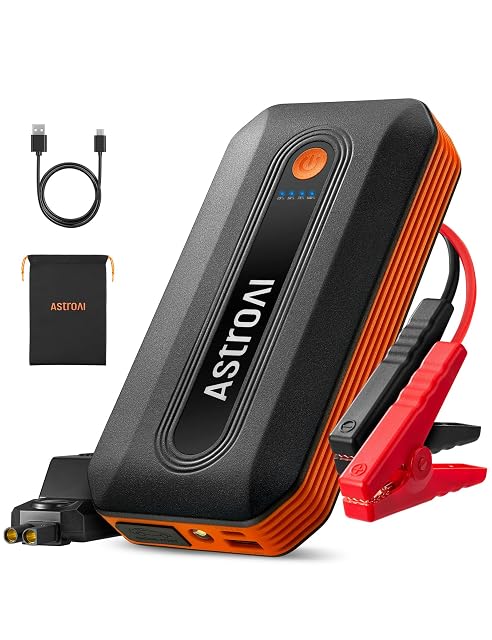
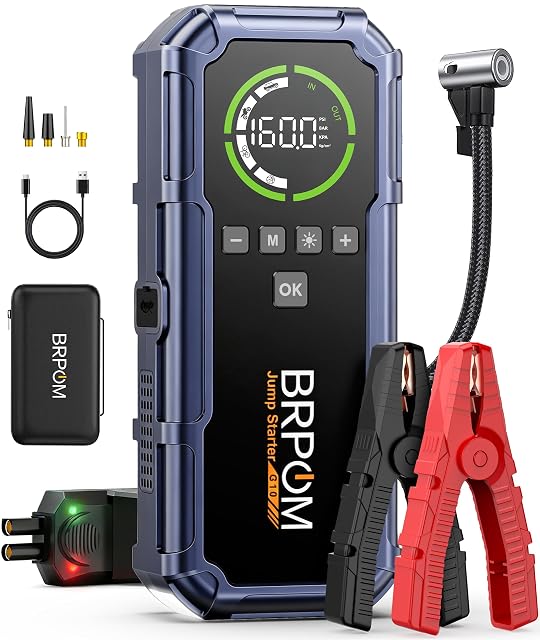
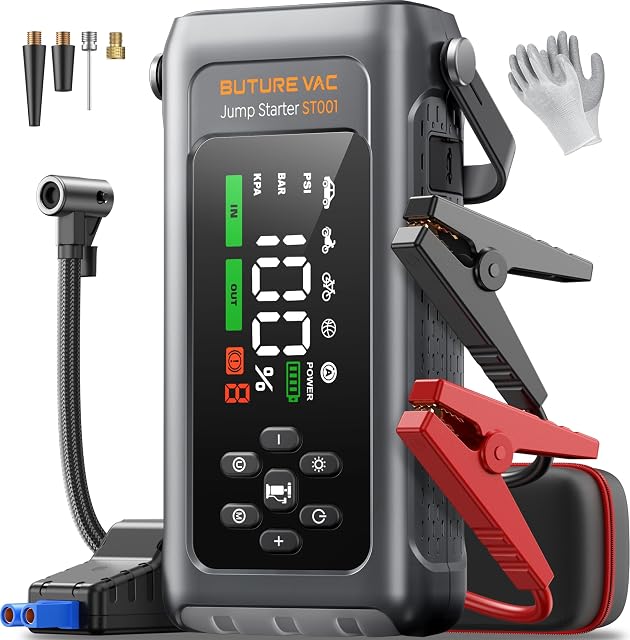
Of the seven units on this shelf, this is the only one that publishes an interval. The published AstroAI, BRPOM, BUTURE, Dino KRAFTPAKET and Trekure packs publish none.
And it is worth reading against this site’s own buying advice for the shelf, because the two do not agree:
| Source | Recharge interval |
|---|
| This site’s buying advice | “charge it twice a year” |
| DEWALT’s own listing | “every 30-days when not in use” |
Six times more often. The site’s advice is general to lithium packs; DEWALT’s is specific to this unit, and on any question of how to keep this unit alive the maker’s figure is the one to follow. It is also, plainly, a commitment: a unit that needs charging monthly is a unit that lives on a shelf by a socket, not in a boot.
And it never names its own battery chemistry, on a shelf named for lithium
This shelf is titled lithium jump starters. The DEWALT listing names the batteries it jump-starts — “compatible with 12V WET, GEL and AGM lead-acid vehicle batteries” — and nowhere names the chemistry of the battery inside it.
What is published is the weight and the charging method:
| Unit | Weight | Recharges from |
|---|
| AstroAI, published | 329 g (11.6 oz) | not stated |
| Dino KRAFTPAKET, published | 23 × 8.7 × 2.8 cm (9.1 × 3.4 × 1.1 in), no weight | not stated |
| This unit | 7,847 g (276.8 oz) | a standard extension cord |
Twenty-four times the published weight of the lightest pack on this shelf, and mains charging through an extension cord rather than a USB or DC input. Those are the two facts; the listing does not join them up, and neither will this page.
What it means practically is that this is not a glovebox item. At 7.8 kg (17.2 lb) and 330 mm (13 in) wide it is a garage unit that gets carried to the car, and the 30-day charging note fits that use.
The alternator test is the one function nothing else here has
“This compact, portable device will test your alternator to make sure it is in proper working order.”
That matters because a flat battery twice in a month is usually not the battery. An alternator that has stopped charging leaves a car that starts from a boost and dies again, and the test tells you which problem you have before you buy a battery.
No other unit on this shelf does it. This site’s battery testers shelf is where that measurement otherwise comes from, and it is a separate purchase.
Alongside it, the LCD readout with real-time information is the other half: of the seven units here, three publish a screen — the published BUTURE at 3.3 inches, the published BRPOM at 2.5 inches, and this one at a size the listing does not state.
But the inflator is the lowest pressure of the three, at the highest price
“120 PSI DIGITAL AIR INFLATOR — Set the desired pressure, and the inflator automatically shuts off when reached.” And: “10-MINUTE AUTO SHUT OFF — inflator timer helps avoid overheating if left on unintentionally or unattended.”
| Unit | Inflator | Extras |
|---|
| BRPOM, published | 160 PSI | memory and preset |
| BUTURE, published | 150 PSI | preset and auto-stop |
| This unit | 120 PSI | auto-stop and a 10-minute timer |
Lowest pressure, highest price — $169.00 against €60 and €56 for the two published combined packs.
The 10-minute timer is the thing it has that they do not, and it is not a convenience. The published BUTURE page names the weakness of every combined tool: “a dedicated inflator has a longer duty cycle”. A timer is a published admission of the same limit and a guard against it, and no other unit on this shelf states one.
120 PSI is enough for any car, van or bicycle tire. It is short of a light truck at 130.
Twenty-five watts of USB-C, which is the highest output here
“A 25W USB-C port and 15W USB-A port.”
The published AstroAI pack states Quick Charge 3.0 on a USB-A port, which is up to 18 W. The other four published packs state a power-bank function without a wattage.
Twenty-five watts over USB-C charges a phone at full speed and a tablet slowly, and it is the only figure in watts on this shelf.
“Metal powder-coated clamps for durability.”
The shelf’s own line is: “Peak amps sell the box; the clamps decide whether it works.” And the introduction: “Then come the parts you actually hold: clamps with real copper, reverse-polarity and spark protection.”
“Metal powder-coated” is a statement about the jaw and the finish, not about the conductor — no copper claim and no cable gauge is published, here or anywhere else on this shelf.
Reverse-polarity protection is published, with an alarm. The published AstroAI pack states ten protections and the published MEGAWISE clamp cable states five by name; DEWALT states one.
“1600 PEAK AMPS — Delivers portable starting power for most 4, 6 and 8-cylinder cars and trucks.”
The introduction is blunt: “its headline number is the least useful one on the box: peak amps are measured over milliseconds and no standard governs how. The figure worth reading is the starting or cranking current, and after that the capacity in watt-hours.”
DEWALT publishes neither. The published Dino KRAFTPAKET pack publishes 600 A starting current, 66.6 Wh and a maximum of 20 start attempts — which is why its own page calls it the one pack here with comparable figures, and that remains true.
What DEWALT publishes instead is the engine coverage in cylinders and the battery types, which is a practical answer to a different question.
What is not published
No starting or cranking current. No capacity in watt-hours, so the 100 Wh air-travel threshold cannot be checked — and at 7.8 kg it is academic. No battery chemistry. No number of start attempts. No operating temperature range, where the published AstroAI pack states −20 to 50 °C and this shelf says lithium “loses capacity exactly when a car refuses to start”. No cable gauge or copper claim. No screen size. No charging time. And the charging cord is not included at $169.
At $169.00 it is the most expensive unit on this shelf, the only one that tests an alternator, and the only one that tells you to charge it every month.
Availability
On sale at around $169 on the American Amazon store at the time of checking.
Prices and availability are what Keepa reported on the date this page was updated; both move.
Prices quoted in this text were read on 6 October 2026. The live price is at the top of the page.