One-person bleeding stands or falls on the reservoir cap · review
MASKO 3 L pressure bleeder review
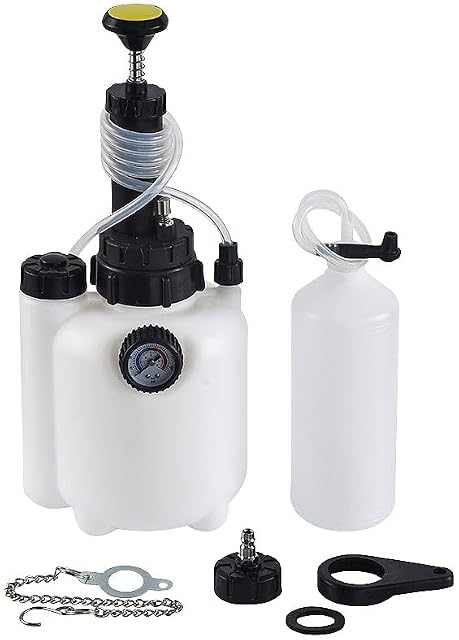
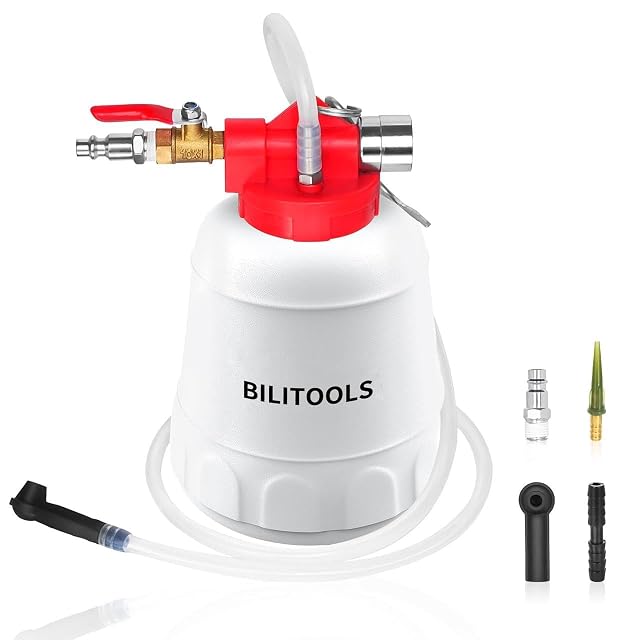
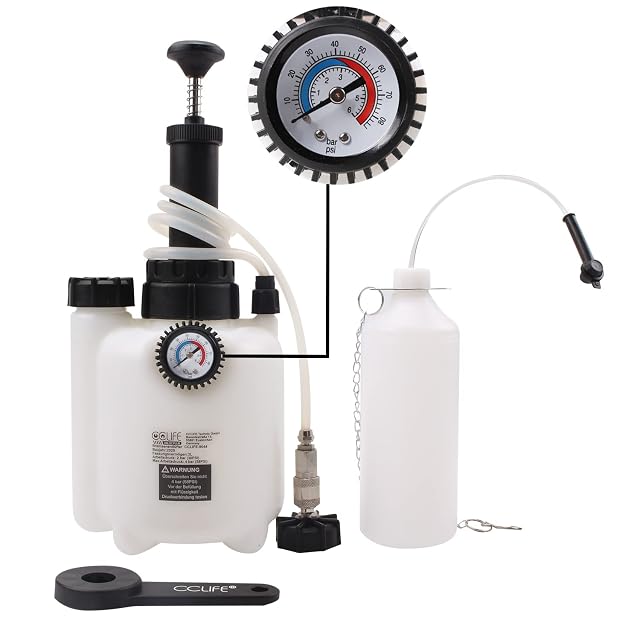
A 3 liter manual pressure bleeder with a gauge: fluid is pushed down from the reservoir, which is the method that gives the most consistent result alone.
The last word The right method, if the cap fits your reservoir. Ask that question first.
What lands on the bench
A 3 liter manual pressure bleeder with an integrated gauge, designed for one-person operation.
Why pressure is the better method
It pushes fluid down through the system from the reservoir. Vacuum bleeding pulls from the bleed nipple and draws air past the nipple threads on the way — which produces bubbles that are not coming from the brake line at all.
The part that decides everything
The reservoir adapter. It has to seal on your car’s master cylinder cap thread, and coverage varies between kits. That single component is the compatibility question.
Where this page stops
At the tool. Bleeding sequence, fluid specification and ABS procedure come from the vehicle manufacturer, and brakes are not the place to improvise.
Availability
Listed but with no offer on the American Amazon store — the reference exists there and nobody is currently selling it.
Prices and availability are what Keepa reported on the date this page was updated; both move.
What it does, and what it misses
Strengths
Pressure bleeding is the method least likely to draw air past the nipple threads
A gauge, so the pressure applied is known rather than guessed
Manual pumping, so no compressor is needed
Compromises
The reservoir adapter cap is what decides whether it fits your car, and coverage is not detailed here
Manual pumping has to be topped up as fluid leaves the tank
Three liters is more than a car needs, and more to store
Specifications
Capacity
3 l pressure vessel, stated
Method
Manual pressure system, stated
Monitoring
Integrated pressure gauge, stated
Operation
One person, stated
Materials
Robust and weather-resistant, stated
Amazon reference
B0DLKZ6QKL
EAN
4255598338639
The questions that reach us
Pressure or vacuum bleeding?
Pressure pushes fluid down from the reservoir and gives the cleanest result. Vacuum pulls from the nipple and tends to draw air past the threads, which looks like a bubble that never clears. Pressure is the better method where the cap fits.
Where does the procedure come from?
The workshop manual for the vehicle: sequence, fluid specification and any ABS-specific steps. This page describes a tool, not a procedure.
Our score
7.5/ 10
The right method, if the cap fits your reservoir. Ask that question first.
This one’s price among garage tools
A reference exists on these Amazon stores: France, Germany, Italy, Spain, United States. Listed is not the same as in stock — availability changes daily.
Details checked on September 4, 2026.
Who should pick this one, among garage tools
Bleeding brakes alone, on a car whose reservoir the supplied cap fits.
Sources
Specifications: the manufacturer sheet for garage tools and the matching Amazon product page. Prices and availability: Keepa. Every figure on this page names its source.