Skip to content

AGT 3 L bleeder with E20 adapter vs BILITOOLS 1 L pneumatic vacuum bleeder

Pressure or vacuum bleeding at home?

Both let one person bleed brakes. Pressure pushes fluid down from the reservoir and gives the cleanest result where the adapter fits; vacuum draws from the bleed nipple, fits every car, and pulls air past the nipple threads on the way.

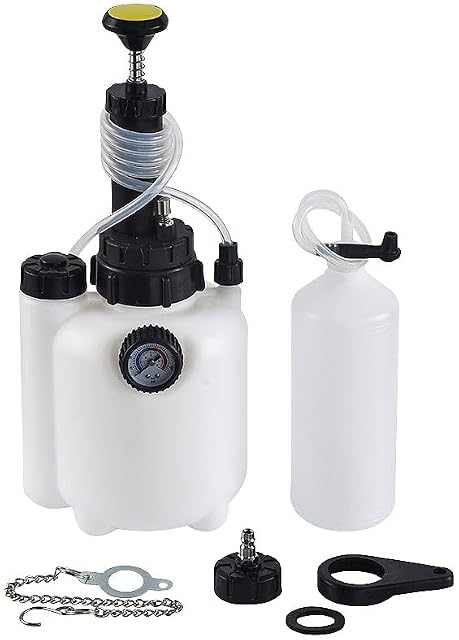
AGT 3 liter brake bleeder with E20 adapter

AGT 3 L bleeder with E20 adapter

7.5/10

Wins 4 of 8

Check price

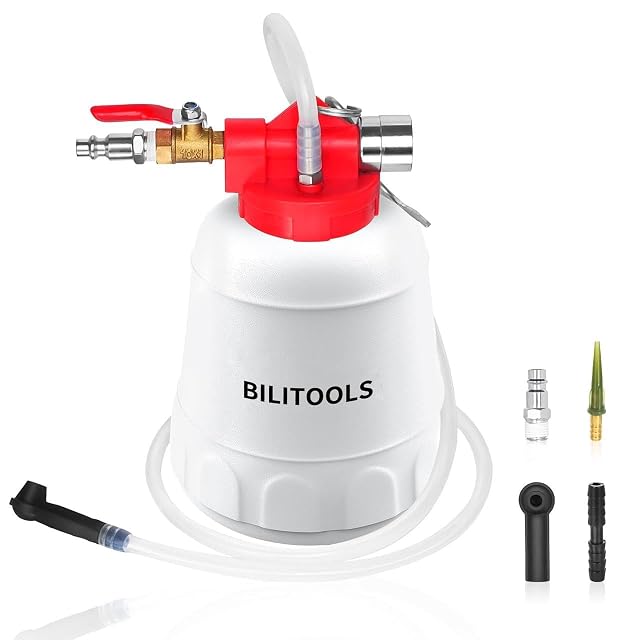
BILITOOLS 1 liter pneumatic brake bleeder

BILITOOLS 1 L pneumatic vacuum bleeder

8.1/10

Wins 3 of 8

Check price

≈ $27

Figure by figure

Compared on 3 L bleeder with E20 adapter 1 L pneumatic vacuum bleeder
Method Pressure at the reservoir Vacuum at the bleed nipple
Capacity 3 l pressure vessel plus a 1 l collection bottle 1 l collection bottle
Reservoir adapter E20, Ø 45 mm (1.77 in) — named None needed
Fits any car Only where the E20 cap fits Yes — connects at the nipple
Compressor required No Yes, 6–12 bar
Pressure monitoring Integrated gauge Not published
Air drawn past nipple threads No Yes — the known artefact of the method
Hands-free once connected Needs pumping to maintain pressure Stated hands-free once hung in place
Listed on amazon.com Yes Yes

A tick marks the better answer on that line only. Counting ticks does not decide the page — the two verdicts below do, because these products answer different questions.

Which of the two, for which work

Buy the AGT 3 L bleeder with E20 adapter

Buy the AGT if its adapter fits your car. It names the fitting — E20 at 45 mm (1.77 in), which most European reservoirs use — and that is the only compatibility question a pressure bleeder has. Pressure is the method least likely to produce bubbles that are not really there, and the gauge means the pressure applied is known.

Buy the BILITOOLS 1 L pneumatic vacuum bleeder

Buy the BILITOOLS if you have a compressor, or if your reservoir cap is unusual. Connecting at the nipple removes the adapter question entirely, and the maker states it works hands-free once hung in place. Expect bubbles that never stop — they arrive past the nipple threads, and a smear of grease reduces them.

The questions that reach us

Why do bubbles never clear with a vacuum bleeder?

Because air is drawn past the threads of the bleed nipple, not out of the brake line. It is the known artefact of the method rather than a fault.

Do I still have to top up the reservoir?

Constantly, with either method. Running the master cylinder dry means starting again.

Where does the procedure come from?

The vehicle manufacturer: sequence, fluid specification and any ABS-specific steps. This site describes the tools and stops there.

The detailed pages